San Jose Water Feature Maintenance
Puddle Pool Services maintains fountains and water features in San Jose and nearby Santa Clara, Milpitas, Fremont, Newark, Pleasanton, Livermore and Tracy, from courtyard fountains at home to commercial features at hotels and shopping centers. Visits balance the water, remove debris and stains and inspect the circulation and filtration system. Waterfalls and spillways built into a pool are cared for along with the pool itself.
- Balance Water Chemistry
- Removal of debris and stains
- Access to specialized tools
- Individualized treatment plans
- Regular inspections of circulation and filtration systems

video: init
Fountains need treatment too
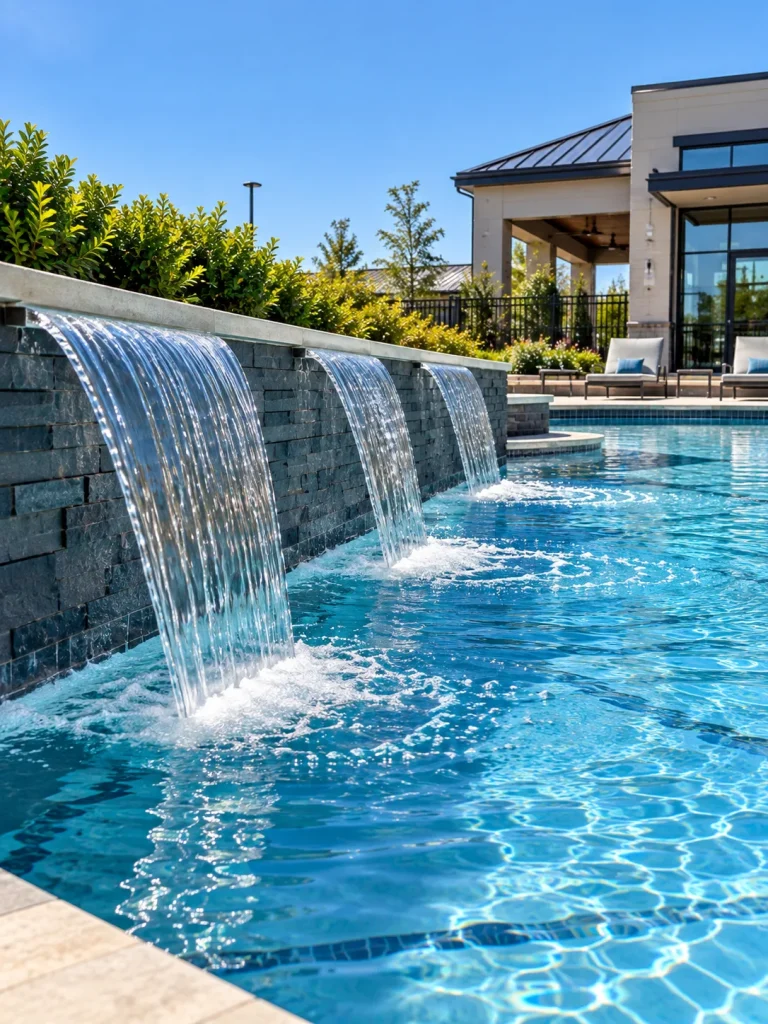
Nobody swims in a fountain, yet it needs balanced water and working circulation just like a pool. Organic debris, bacteria and whatever passersby toss in all push the water off balance. The result is algae, staining and wear on pumps, filters and motors. We look after fountains and water features indoors and outdoors, from residential pieces to large commercial features in hotels and shopping malls. Features built into a pool share its water and circulation, so they are maintained as part of the pool. Every feature receives a treatment plan that fits its size, its age and the materials it is built from. Work runs from top to bottom so a clog higher up does not undo the cleaning below. Natural stone, liners and LED lighting each need their own method, since a heavy handed clean can do real damage.
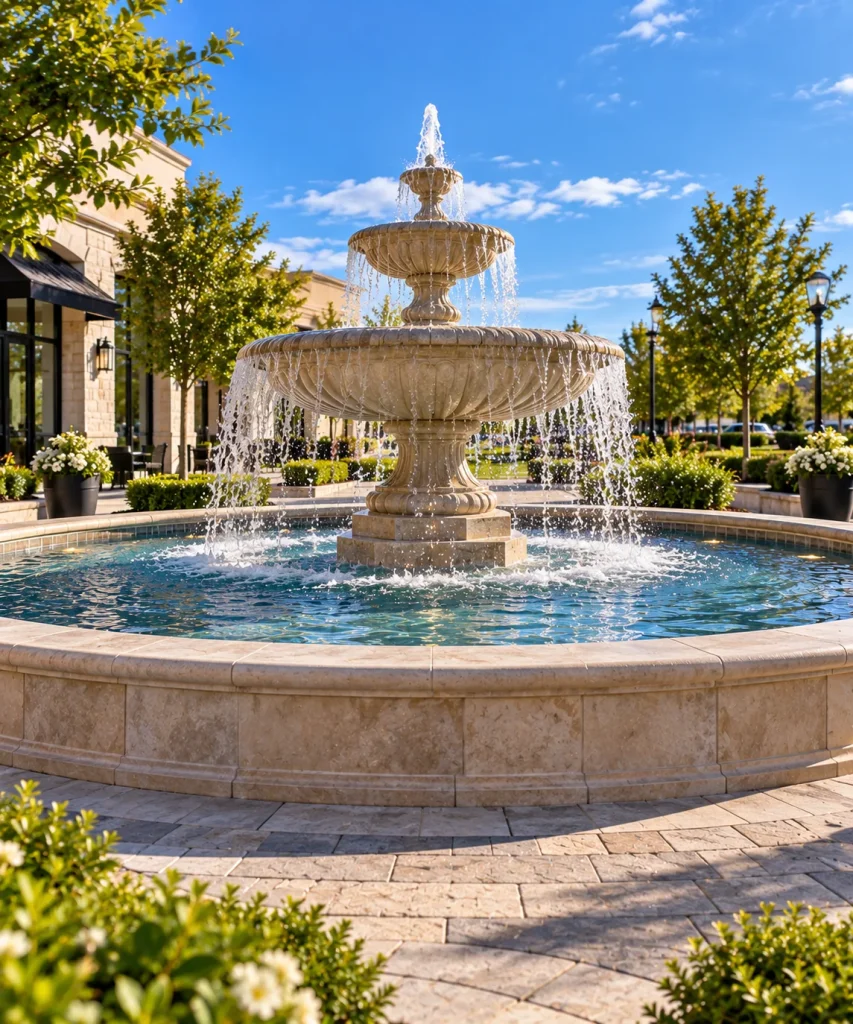
Minerals left behind where water dries
A fountain spreads water thin over stone and fixtures, then lets it evaporate, so minerals collect faster than in a pool. How fast depends on the supply. Cal Water's 2025 report for its Livermore district gives local groundwater an average hardness of 315 ppm within a range of 100 to 470. In north Santa Clara, City wells average 293 ppm against 60 ppm for the SFPUC water that ZIP 95054 receives. The two may be blended. Fremont is milder: ACWD surface water in central and south Fremont averages 96 ppm, with north Fremont's blend at about 138 ppm. On the harder supplies, deposits build on lips, spillways and nozzles and stone can stain. Removing them calls for a method matched to the surface rather than a single approach for every feature.
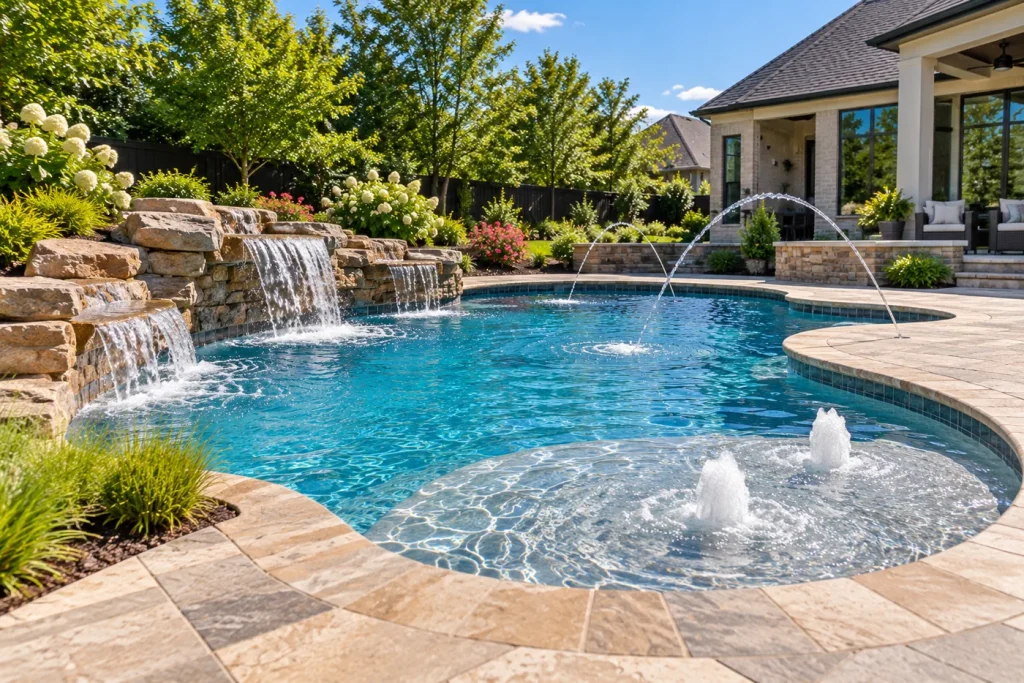
Algae control without copper
Algae is the most common fountain complaint and the way it is treated here has consequences downstream. San Jose Environmental Services identifies copper, used as an algaecide and in plumbing, as a creek pollutant. Provision C.15 of the San Francisco Bay Municipal Regional Stormwater Permit names fountain water alongside pool and spa water, requiring member cities to keep water containing chlorine residual or copper algaecide out of storm drains and waterbodies. That water belongs in the sanitary sewer with the sewer agency's approval or on landscaping that can absorb it. The practical answer is to keep algae from taking hold at all. Steady chemistry, regular removal of debris and a circulation system that keeps water moving through every part of the feature do far more than a strong treatment after the fact.
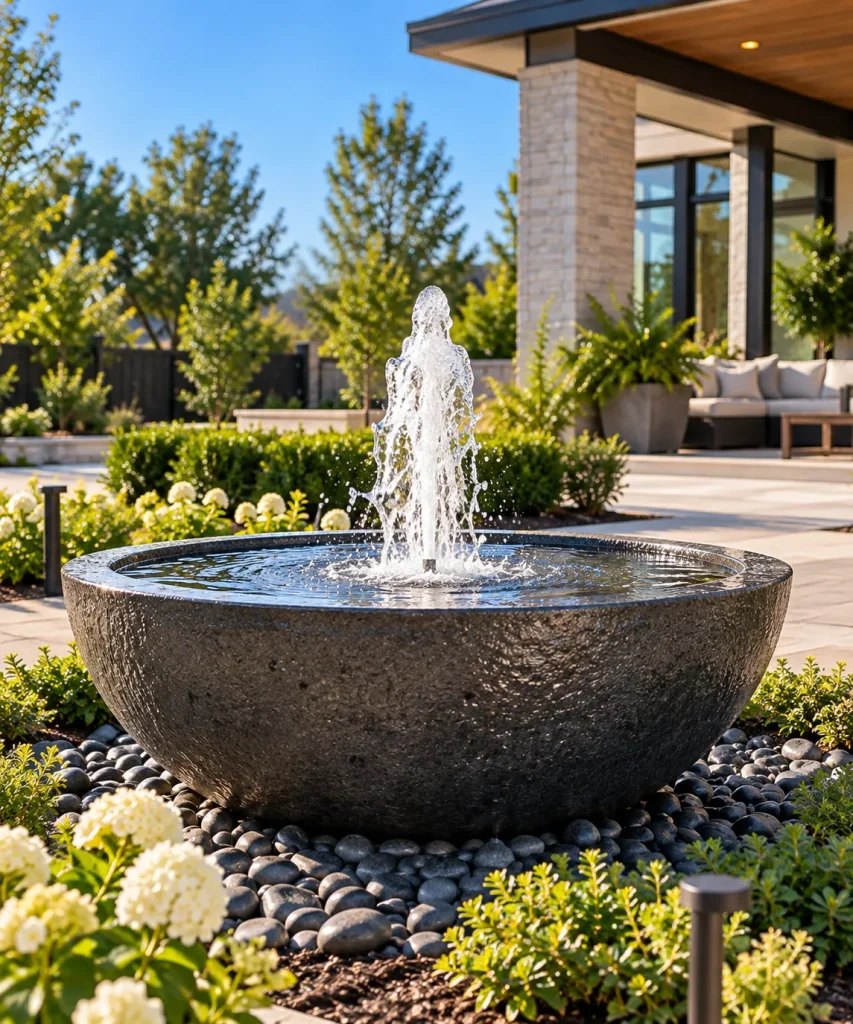
Water features in a declared shortage
Local shortage plans often single out fountains. In San Jose Muni Water areas, which include Alviso and North San Jose, a declared shortage of 40 percent or more prohibits filling any swimming pool, fountain or spa. The Alameda County Water District plan for Fremont and Newark asks customers at Stage 3 to turn off water features. Santa Clara's Potable and Recycled Water System Rules and Regulations require recirculating systems on all water features. A feature that holds its water and recirculates properly is far easier to keep running when restrictions arrive. If yours keeps losing water, splash and evaporation explain some of it. Faster loss can come from a clogged line sending water where it should not go or a plumbing problem, which an inspection of the circulation system will help trace.
Dry summers and the service schedule
Outdoor features face months without rain. NOAA's 1991 to 2020 normals at the San Jose airport station, which also serves as the reference for north Santa Clara and Milpitas, record 0.00 inches of rain in July, 0.05 in August and 0.07 in September. Heat inland is stronger still: the Tracy Carbona station averages about 80.2 days a year at 90 F or more, against about 12.5 at the Fremont station. Evaporation through a long dry season lowers the level and concentrates minerals, while debris that would once have washed away settles in basins. Outdoor features and busy public features usually need more frequent attention than indoor ones. Your schedule is set as part of the treatment plan and adjusted as the seasons change.
San Jose Water Feature Maintenance: Frequently Asked Questions
Why does San Jose discourage copper algaecides in pools and fountains?
San Jose Environmental Services identifies copper, used as an algaecide and in pool plumbing, as a creek pollutant. Its guidance suggests asking your pool service to solve persistent algae without copper algaecides and managing pH and hardness to limit copper pipe corrosion that can stain the pool. Steady chemistry and regular cleaning are how algae is kept from taking hold in the first place.
Can I fill a pool, spa or fountain during a water shortage in North San Jose?
It depends on the declared shortage level. Under San Jose Municipal Water's 2025 Water Shortage Contingency Plan, a shortage of 30 percent or more limits refilling pools and spas and prohibits the initial filling of residential pools and spas. At 40 percent or more, filling any swimming pool, fountain or spa is prohibited. Without a Council declaration, the City operates at Stage 0 with its ongoing water use rules.
What happens to pools and water features in Fremont and Newark during a shortage?
The Alameda County Water District's 2025 Water Shortage Contingency Plan runs in six stages, with Stage 1 voluntary and Stages 2 to 6 mandatory. Customers are asked not to drain and refill pools except for a health and safety issue and Stage 2 may add a prohibition on doing so. At Stage 3, customers are asked to turn off water features and cover all pools.
What does a water feature maintenance visit include?
Balancing the water chemistry, removing debris and stains and inspecting the circulation and filtration system. We work top to bottom so a clog in one part does not undo the cleaning everywhere else.
Can you clean natural stone and delicate features?
Yes, with the right method. Natural stone, liners and features with LED lighting or other delicate parts each need a different approach, and a heavy handed clean can do real damage. We match the method to the materials.
Watch what we do
-
Residential Services
-
Commercial Services
Other services we offer in San Jose
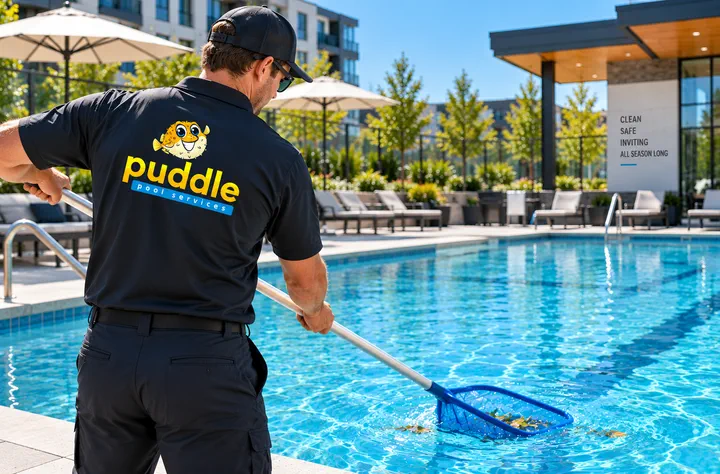


Areas we serve
- Fremont
- Santa Clara
- Tracy
- Livermore
- Milpitas
- Pleasanton
- Newark
- Alviso
- Ruby Hill
- Sunol
- Mount Hamilton
Where you can find us
Talk to us
So Why Puddle for Water Feature Maintenance in San Jose?
-
Transparent Pricing
That’s Right. No Hidden Prices. Up Front and Straight Forward Pricing.
-
E-Reports
Your Service Sent in an E-Report, in Real Time. What Was Done, What Chemicals Were Used, What Your Levels Are At etc. All With Before & After Pictures, Time Stamped In and Time Stamped Out.
-
Happy Snappy Techs
Fully uniformed, CPO certified technicians in fully wrapped vehicles, so you always know who is at your gate and that your pool is in trained hands.
Ready to book Water Feature Maintenance in San Jose?
Book online in under a minute, or call and someone will actually pick up.

Accredited, certified and reviewed