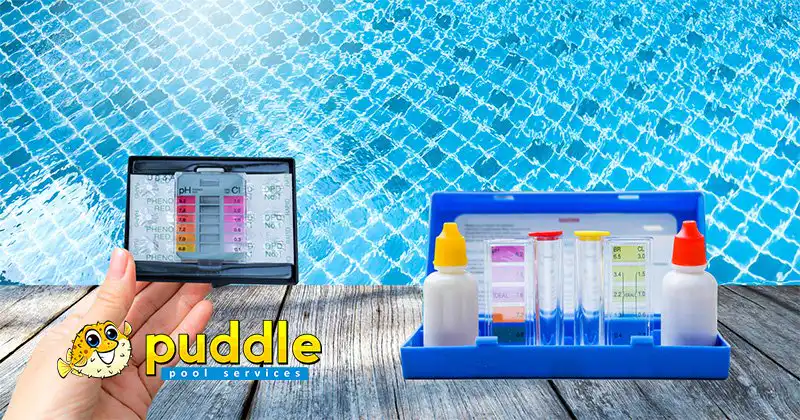
Balancing the water chemistry in your pool can be complicated. Even with testing kits and strips on hand, water balance can be hard to achieve. Anyone can pour in a bit of liquid chlorine or toss in a puck now and then, but what about your pH levels?
It’s easy to get stuck focusing on sanitizer levels alone but there’s more to proper water chemistry than that: namely, pH. Overlooking pH levels is a common mistake that results in large-scale complications. When balancing your pool water pH levels should be a top priority. High pH levels make sanitizers ineffective, opening the door for health and safety risks. Low pH levels mean water is acidic and will start to cause damage to pool equipment.
pH Ranges and How to Navigate Them
Pool water balance is in constant flux. Increased temperatures, high usage, and even surrounding plant life will impact the chemical levels in your pool. Before it’s treated, pure water is susceptible to bacteria, contaminants and algae growth. PH refers to how acidic or alkaline pool water is. The ideal pH range is between 7.2 – 7.8.
Properly adjusting pH levels requires regular balancing and should be part of your regular pool maintenance routine.
High pH: When sanitizing your pool, high pH levels can render chlorine ineffective. Low chlorine levels leave the door open for bacteria and algae growth. High pH will also lead to eye irritations, skin allergies, and even wear and tear to suits, goggles and pool toys.
Some of the contributing factors to high pH include:
- Increased Temperature
- Above Recommended Dose of Stabilizer
- Algae
- Strong Liquid Chlorine (US)
It’s easy to shock your pool when you start to see cloudy water, but strong acids will contribute to elevated pH. Puddle technicians test pool water, balancing sanitizers, total alkalinity, pH and calcium.
High pH means water is too alkaline, and this reduces the efficiency of chlorine. This means water isn’t properly disinfected. Water will also go cloudy, and scale buildup will start to form.
Reduced chlorine effectiveness: limits the chlorine’s ability to sanitize pool water, allowing bacteria and algae to thrive.
Scale Buildup: alkaline water can cause calcium carbonate (scale) to deposit on pool surfaces, equipment and plumbing. This means costly repairs for pumps, filters and plumbing.
Low pH: Reduced pH levels signal that the pool water is acidic. With a high acid-base, you can expect to see discomfort in swimmers, namely with dry skin, as well as ear and eye irritation. Even worse than that, acidic water will wear down on pool equipment, causing damage.
Skin & Eye Irritation: Highly acidic pool water will often irritate eyes and ears, as well as dry skin.
Equipment Damage: High acidity can corrode pool equipment. Low pH will corrode metal surfaces, pool ladders, light fixtures, railings and all metal parts in the pool pump, filters and heaters.