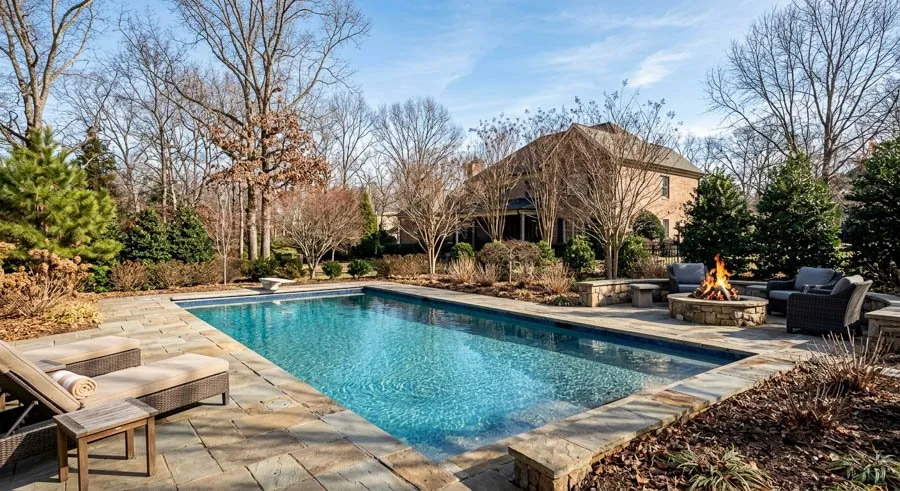
Quick Answer: Because Charlotte winters are relatively mild, about two-thirds of local homeowners choose to leave their pools open year-round, while the remaining third opt to close and cover them. The overall costs between closing your pool and keeping it open are surprisingly similar. The best choice depends on your yard’s tree canopy, your aesthetic preferences, and your willingness to manage off-season maintenance.
As the Carolina summer humidity fades and the crisp autumn air moves in, pool owners face the ultimate seasonal dilemma: do you close the pool for the winter, or keep it running?
Here in Charlotte, our winters are relatively mild. Because of this, we see a clear split where about two-thirds of homeowners choose to leave their pools open year-round, while the remaining third opt to close and cover them.
There is no universally “right” answer, but there is a right answer for your home. Let’s break down the pros, the cons, and the real costs of each approach so you can make the best decision for your backyard.
Option 1: Keeping It Open (The 2/3 Majority)
For the majority of local homeowners – from Lake Norman down to Waxhaw – leaving the pool open is the preferred route. If you have a pump with freeze protection, this is much easier than one with manual control.
The Pros
- Visual Appeal: A clean, moving body of water looks beautiful from your kitchen window. It keeps your backyard feeling like a living oasis rather than a dormant construction zone.
- Ready for Warm Spells: Charlotte is notorious for those random 70 degree days in December. If you have an attached hot tub or a pool heater, keeping the system running means it’s always ready for a spontaneous winter dip.
- Easier Spring Transition: When the yellow pollen arrives in early spring, an already-running pool is much easier to balance and get swim-ready than one that has been stagnant under a cover for five months.
- Effortless Opening: Keeping your pool open means you get to skip the dreadful spring opening chores. You don’t have to wrestle with removing, cleaning and finding a place to store a heavy, dirty winter cover. You also don’t have to deal with fishing slimy water tubes out of the pool, or worse, opening the pool to find unexpected surprises like a green, algae-filled swamp.
The Cons
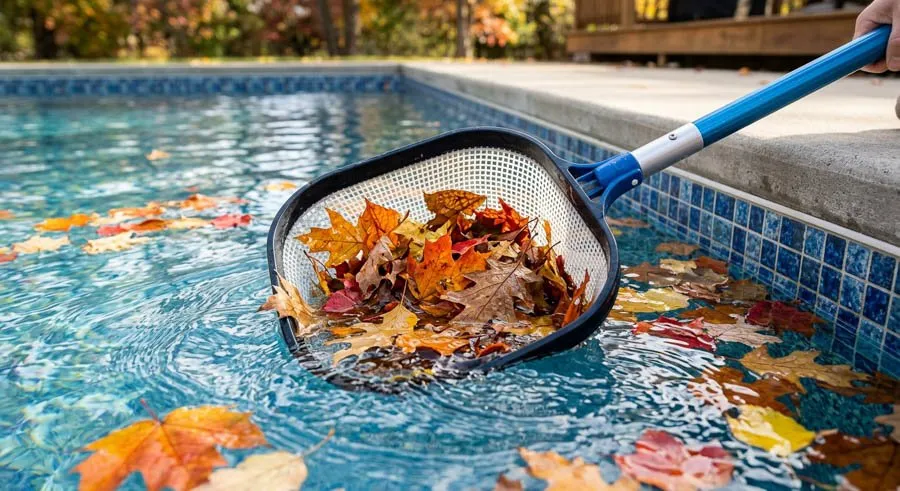
- The Fall Foliage Battle: This is the big one. Our beautiful Carolina trees drop leaves relentlessly. Keeping the pool open means constant skimming and emptying skimmer baskets to prevent clogs and organic staining. One strategy to mitigate this is a leaf net. It’s an easy way to limit the maintenance during the heaviest period.
- Freeze Protection: When temperatures drop below freezing, your pump must run continuously to prevent pipes from bursting, which increases energy usage. A variable speed pump can run slowly to keep the cost at a minimum. (It also saves you money all year long!)
Option 2: Closing and Covering (The 1/3 Minority)
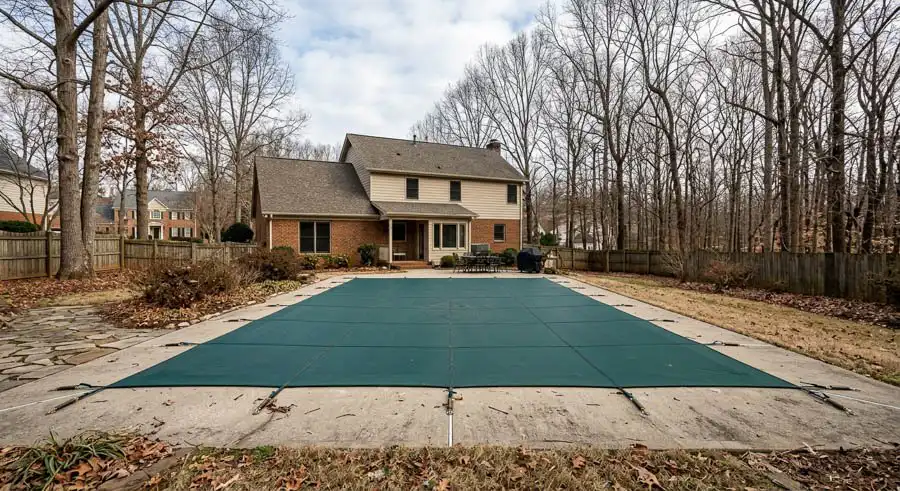
For the remaining third of pool owners, usually those surrounded by heavy tree canopies in areas like Matthews or Huntersville, closing the pool is the way to go.
The Pros
- Set It and Forget It: Once the cover is strapped down, and your system is cleared of all water, your daily maintenance drops to zero. No skimming, no vacuuming, no stressing about the weather forecast.
- Energy Savings: You can turn off the pump completely, saving on your winter electricity bills.
The Cons
- Aesthetics: Even the nicest safety covers look like a giant trampoline in your yard.
- Spring Swamp Risk: If a pool isn’t winterized correctly with the right chemical balance, you might pull back the cover in April to find a green, algae-filled swamp.
The Financial Comparison: What Does It Actually Cost?
Many homeowners assume that turning off the equipment for five months will save them a fortune. The reality is that the costs are surprisingly similar over the course of the off-season.
Here is a rough breakdown of what a typical 5-month off-season costs:
| Expense Category | Keep the Pool Open | Close the Pool |
| Electricity | $200 – $300 | $0 |
| Chemicals | $200 (not required with professional services) | $100 – $200 (not required with professional services) |
| Closing/Opening Materials* | $0 | $100 – $200 (not required with professional services) |
| Optional Professional Services | $1,000 – $1,500 | $1,000 – $1,500 |
| Estimated DIY Total | $400 – $500 | $200 – $400 |
| Estimated Pro-Maintained Total | $1,100 – $1,800 | $1,000 – $1,500 |
Note: This doesn’t include the upfront cost of purchasing a cover if you don’t already have one, which can range from $250 to $5,000+ depending on type and size.
Ultimately, the financial difference is negligible. The real currency is time if you choose to do it yourself.
The Stress-Free Solution for the Holidays
Whether you decide to keep the pool open to enjoy the view, or you want it securely covered until spring, the off-season shouldn’t be a source of stress.
Between managing the endless influx of fall leaves, preparing for Thanksgiving, and dealing with the hectic holiday season, the last thing you want to worry about is whether your pool chemistry is balanced or if your pump is safe from a freeze.
That’s where Puddle Pools comes in. If you want to keep your pool open and beautiful, our routine maintenance programs cover the greater Charlotte area to keep your skimmers empty and your water crystal clear all winter long. If you’d rather put the pool to bed, our professional closing services ensure your equipment is safe from freezing and your water is treated to prevent spring algae.
Don’t spend your winter fishing leaves out of freezing water. Give us a call today to get on our winter maintenance or closing schedule! 704-741-2185
Frequently Asked Questions
Is it cheaper to close my pool or keep it open during a Charlotte winter?
The off-season costs for both options are surprisingly similar. If managing the pool yourself, keeping it open costs roughly $400 – $500 over five months, while closing it costs $200 – $400 (assuming you already own a cover). If you hire professionals, both options range from the low to mid $1,000’s.
Will my pool pipes freeze if I keep the pool open in the winter?
When temperatures drop below freezing, your pool pump must run continuously to prevent pipes from bursting. Utilizing a variable speed pump allows you to run the water slowly, protecting your plumbing while keeping energy costs at a minimum.
How do I handle falling leaves if I keep my pool open?
Constant skimming and emptying skimmer baskets is required to prevent clogs and organic staining from Carolina fall foliage. Installing a leaf net over the water is a highly recommended strategy to limit maintenance during the heaviest periods of leaf drop.