Our Advanced Leak Detection Process
Our comprehensive approach to leak detection begins with a thorough assessment, followed by a systematic application of industry-leading techniques. We don't just guess; we employ precise methods to ensure accurate results every time. This detailed process allows us to tackle even the most elusive leaks, minimizing disruption to your property.
Here’s how we identify the source of your water loss:
- Visual Inspection: Our technicians meticulously examine the entire pool structure, including the deck, coping, tiles, and equipment pad. We look for visible cracks, rust stains, or damp spots that might indicate a leak in the pool's visible components.
- Pressure Testing: This crucial step involves isolating sections of your plumbing lines and subjecting them to increased pressure. A measurable drop in pressure within a sealed line definitively reveals a leak within that specific plumbing segment, helping us narrow down the problem area efficiently. This method is vital for detecting underground pipe leaks that are not visible.
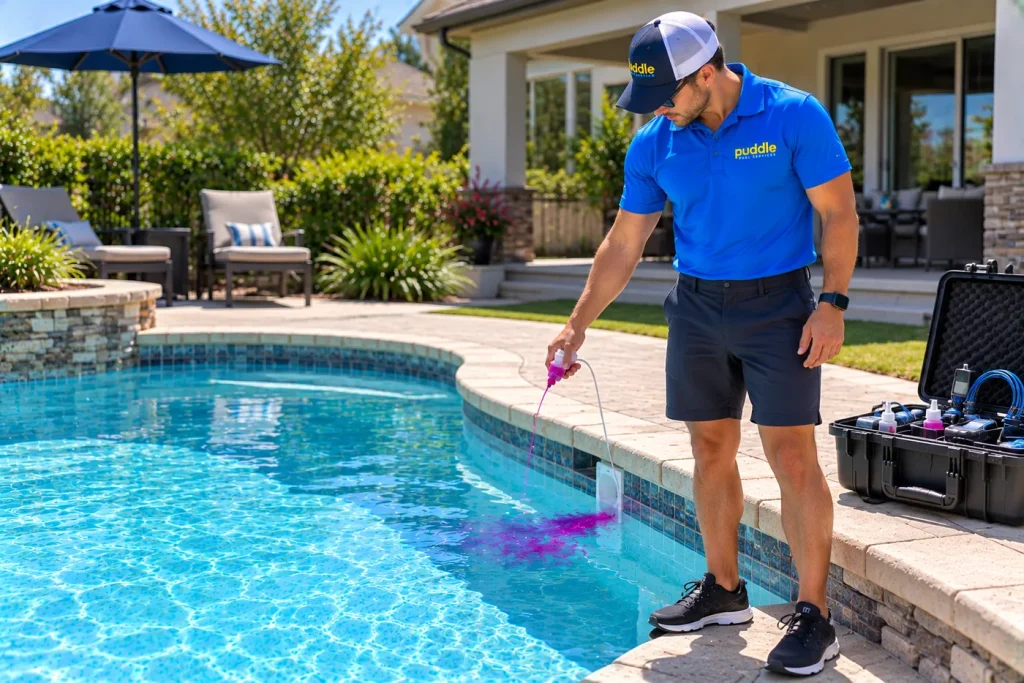
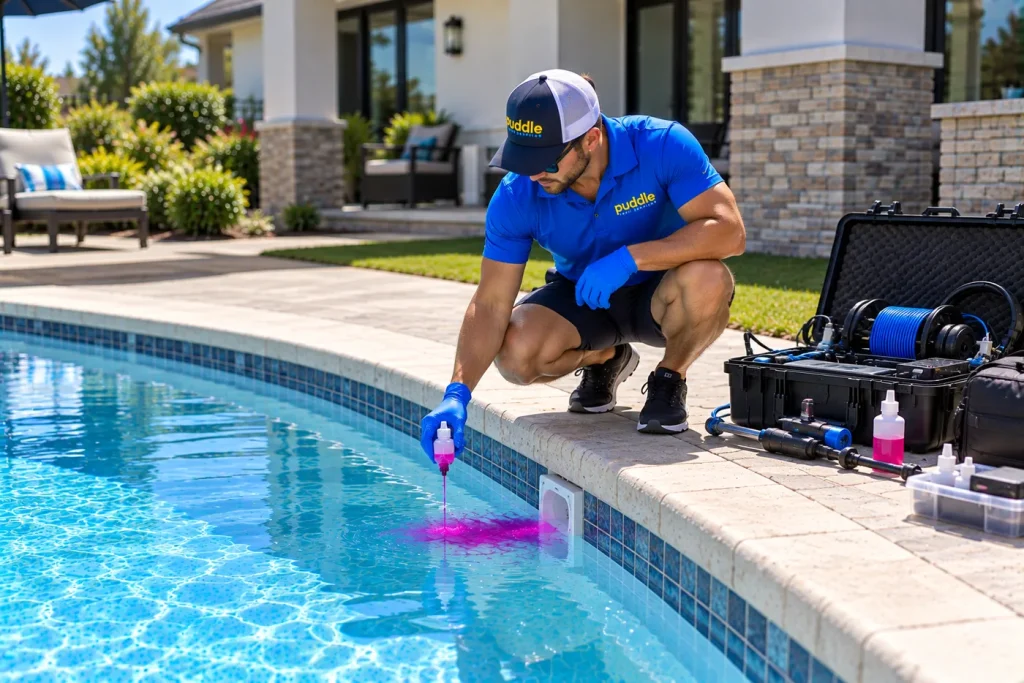
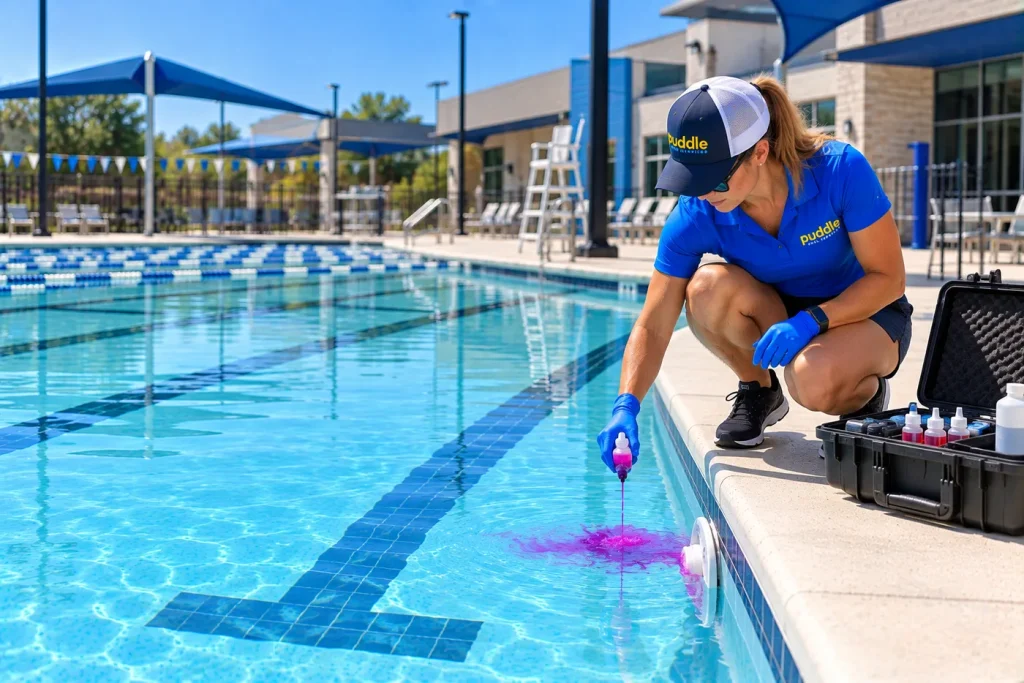
- Dye Tests: For subtle cracks, small holes, or breaches in the pool shell or liner, we use specialized, non-toxic dyes. The dye is carefully introduced near suspected leak areas and is then drawn into the leak by the water's suction, making the precise point of water egress visible. This is particularly effective for small, hard-to-spot surface leaks.
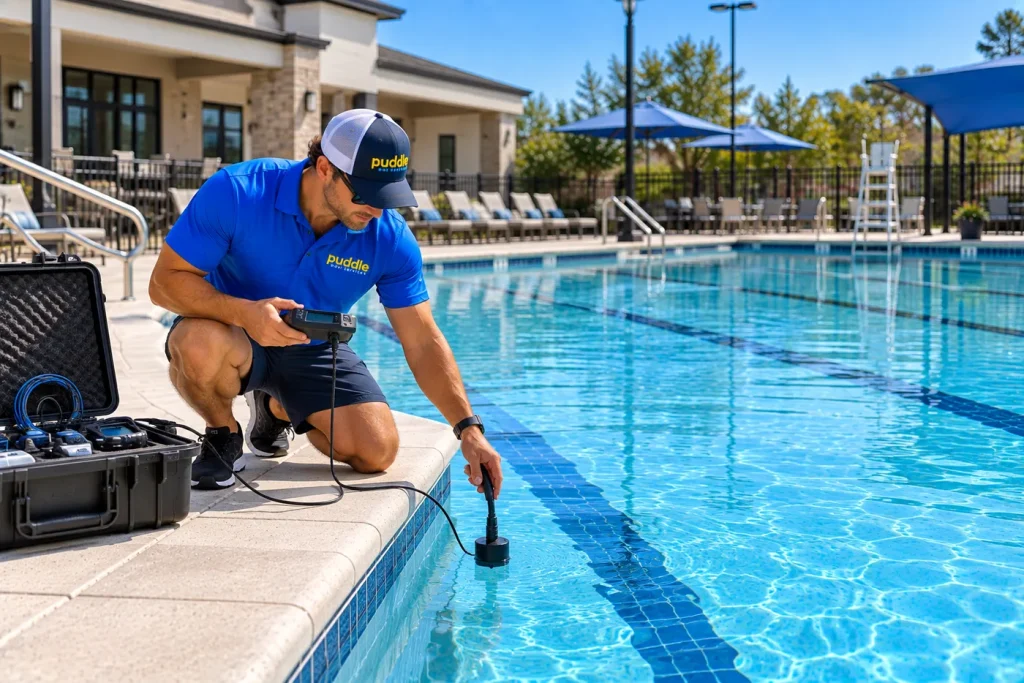
- Acoustic Leak Detection: We employ highly sensitive listening devices, including specialized hydrophones and ground microphones, to detect the subtle sound of water escaping from underground pipes. Even faint sounds of water turbulence or trickling can indicate a hidden leak, allowing us to pinpoint its exact subsurface location with remarkable accuracy.
- Water Loss Analysis: By carefully monitoring your pool's water level over a set period, often using a bucket test, we can accurately calculate the exact rate of water loss due to evaporation versus a leak. This data helps us confirm the presence of a leak and gauge its severity before proceeding with more invasive testing.