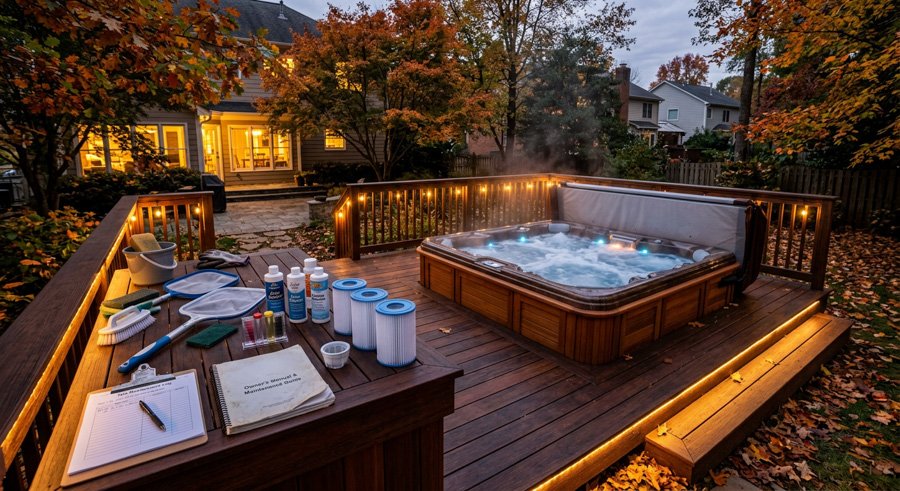
Did your new Lake Norman home come with a backyard hot tub? Awesome! But if you’re thinking, “Great, a hot tub is so much smaller than a pool, this will be a breeze,” you might want to think again.
Because hot tubs hold a small volume of water kept at high temperatures (often 100°F–104°F), their water chemistry is notoriously difficult to maintain properly. Add in local North Carolina factors—like humid summers that accelerate bacterial growth and heavy seasonal tree pollen—and water balance becomes a delicate science.
Don’t let that stress you out! With a clean slate, you’ll be soaking in no time. Here is the exact 4-step checklist for inheriting a hot tub in the Charlotte metro area.
1. Deep Purge and Drain
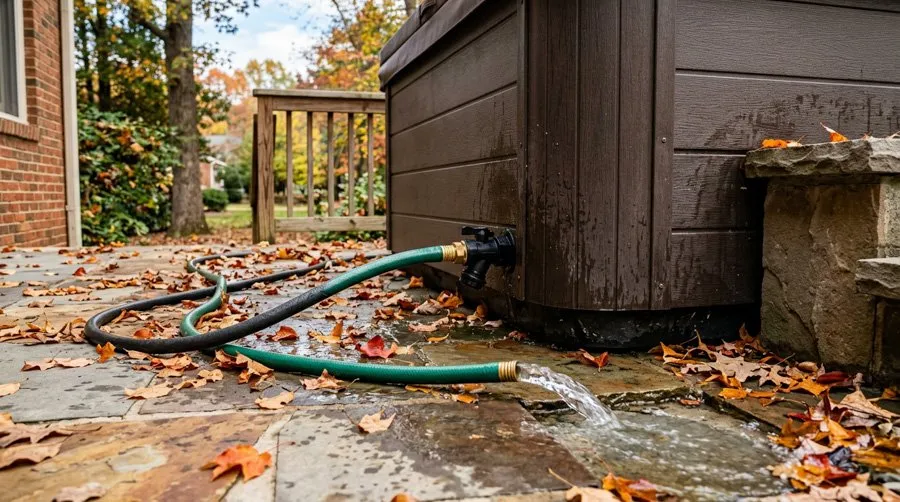
First things first: you need to deeply purge the entire plumbing system and drain the tub to remove all built-up biomass in the lines.
Think of it this way: you wouldn’t use someone else’s bath water, so you definitely don’t want to soak in their old hot tub water, either! Always start fresh. Adding a specialized plumbing line flush cleaner before draining breaks down hidden bacteria, body oils, and stubborn bio-film clinging to the internal pipes where you can’t see them.
In Charlotte’s warm climate, stagnant hot tub lines in a vacant home can harbor heavy bacterial buildup in just a few weeks—making a chemical line flush essential before your first soak.
2. Swap the Filters
While the tub is empty, toss out the old filter cartridges and replace them with brand new ones. You don’t want to run fresh, clean water through years of old grime and chemical buildup. For homes in mature, tree-heavy neighborhoods like Matthews, Huntersville, or Weddington, old filters are often clogged with fine organic debris and spring pine pollen (“The Pollening”). Installing a fresh filter cartridge ensures maximum circulation efficiency and crystal-clear water from day one.
Not sure which replacement filter size or model your inherited hot tub takes? Contact us at 704-741-2185 for a hot tub system inspection. We’ll source and install the exact fit for your model.
3. Refill and Balance
Once it’s clean, equipped with new filters, fill it back up.
- Lake Norman & Mooresville Well Water Tip: If your home relies on private well water, use a hose pre-filter during the refill process to catch heavy metals (iron/manganese) and calcium. Add a metal sequestrant immediately to prevent surface staining when the water heats up.
- City Water (Charlotte, Ballantyne, Waxhaw): Focus on balancing total alkalinity first, then pH and sanitizer levels (chlorine or bromine).
Once the water is chemically balanced, let it heat up to your desired temperature.
Not sure how to balance properly? Contact us at 704-741-2185 for a hot tub system inspection and/or maintenance support. We’ll walk you through everything!
4. The 40-Pound Cover Test
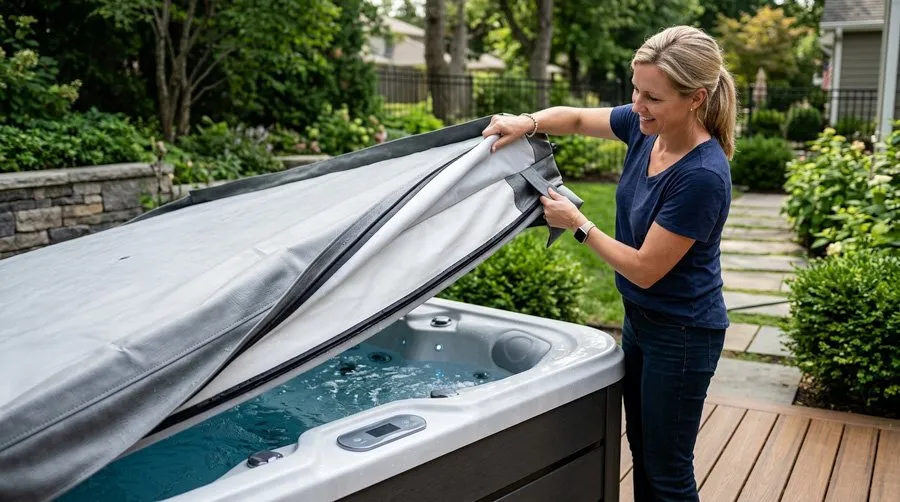
Inspect your hot tub cover to ensure it is still insulating properly. Over time, age and improper water balance will degrade the insulating foam inside the cover, causing it to act like a sponge and hold onto water.
Here is a handy rule of thumb: if the cover weighs over 40 lbs, it’s time to replace it. A heavy, waterlogged cover loses its thermal insulation and will cause your electric bill to skyrocket as the heater works overtime to compensate for lost heat—especially during cold winter snaps in the Carolinas.
Safety Warning: A waterlogged cover can also overload hydraulic cover lifters, leading to mechanical failure, frame damage, or severe injury if the heavy lid slips during use.
Need a Hand Dialing In Your New Hot Tub?
Need someone to take a look at your new setup? The team at Puddle Pools is always here to help get your new backyard perfectly dialed in!
From professional line purges and filter replacements to ongoing water care across the Charlotte metro area—including Lake Norman, Matthews, Huntersville, Ballantyne, Waxhaw, Concord, and Mint Hill—we make sure your hot tub is 100% safe, clean, and stress-free.
Give us a call at 704-741-2185 or request a free quote. Our Charlotte team is standing by.
Frequently Asked Questions
How do you clean an inherited hot tub in a new home?
To clean an inherited hot tub, run a specialized plumbing flush cleaner through the lines to break down internal biofilm. Drain the old water completely, wipe down the shell, replace the filter cartridges with new ones, inspect the cover, and refill with fresh water before balancing the chemistry.
How do I know if my hot tub cover needs to be replaced?
Perform the 40-pound test. If your hot tub cover feels heavy and weighs over 40 lbs, the interior foam has become waterlogged and lost its insulating properties, leading to higher electricity bills. If you have a lift system, it could fail and damage the sides of your tub or worse, injure someone.
Why is hot tub water chemistry harder to maintain than pool water?
Hot tubs contain a small volume of water kept at high temperatures. High heat speeds up chemical reactions, accelerates evaporation, and promotes rapid bacterial growth, making water balance significantly more sensitive than in larger, cooler swimming pools.
How does fill-water quality in the Charlotte area affect my hot tub setup?
Homes around Lake Norman, Davidson, and Mooresville using well water often have higher mineral levels and calcium hardness, requiring pre-filters and metal sequestrants during refilling to prevent staining. Homes on municipal water in Charlotte, Matthews, and Ballantyne generally require less mineral treatment but need careful pH and alkalinity adjustments after refilling.