Tailored Service: Creating Custom Pool Cleaning Plans in Decatur
Pool cleaning isn’t one-size-fits-all. Every swimming pool is subject to the elements, surrounding plant life, rate of use and other variables. Just throwing in a few chlorine pucks or shock treatments when you see cloudiness will help to improve visuals, but without proper balancing, this is only a superficial improvement.
For the best possible results, our technicians break the cleaning process down into multiple steps. After years of industry experience, our team has developed a proven system to get the best results and keep water flowing!
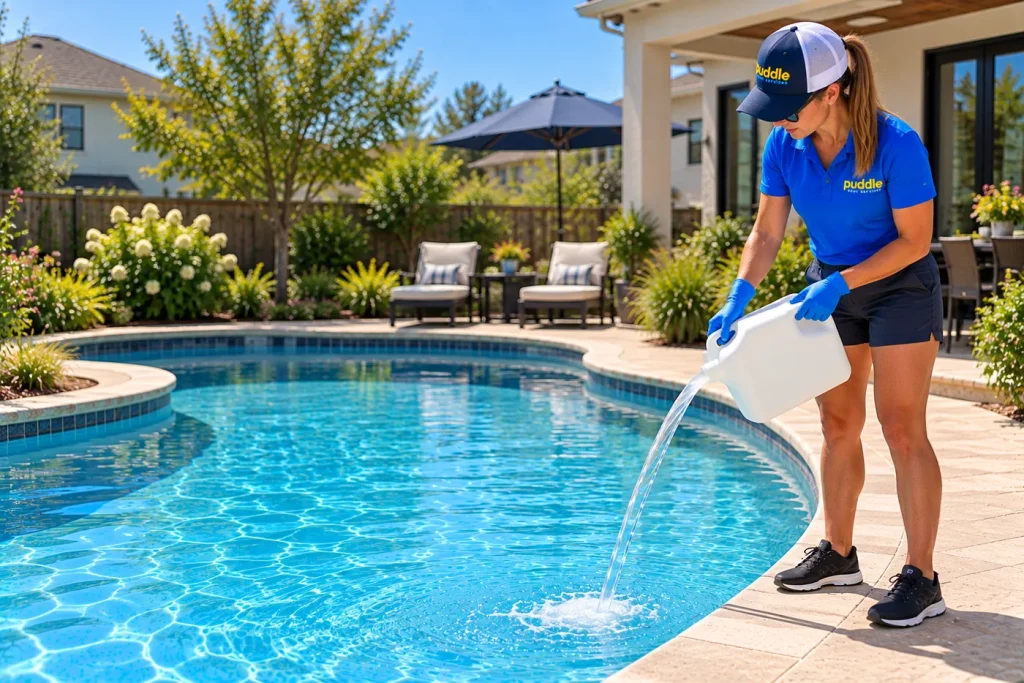
Balancing Water Chemistry: Keeping pool water crystal clear requires regular chemical testing and balancing. Standard testing strips can be confusing and inaccurate. Having your water tested by an expert means balancing sanitizers like chlorine or bromine, pH levels, calcium, and total alkalinity. Balanced chemical levels keep swimmers safe, reduce algae growth, and prevent unnecessary damage to systems.
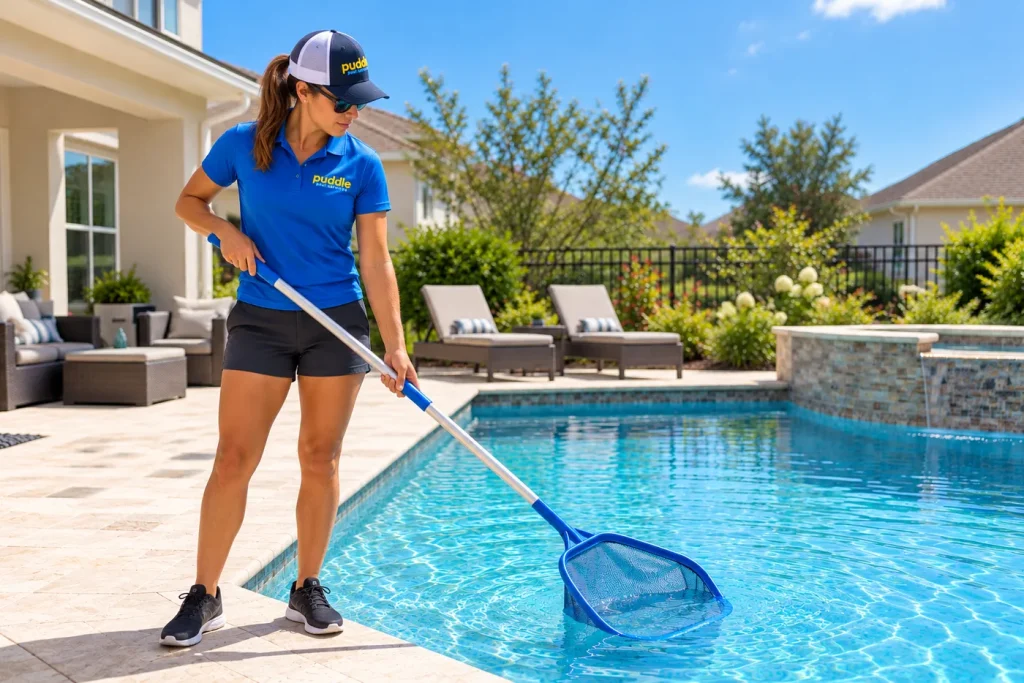
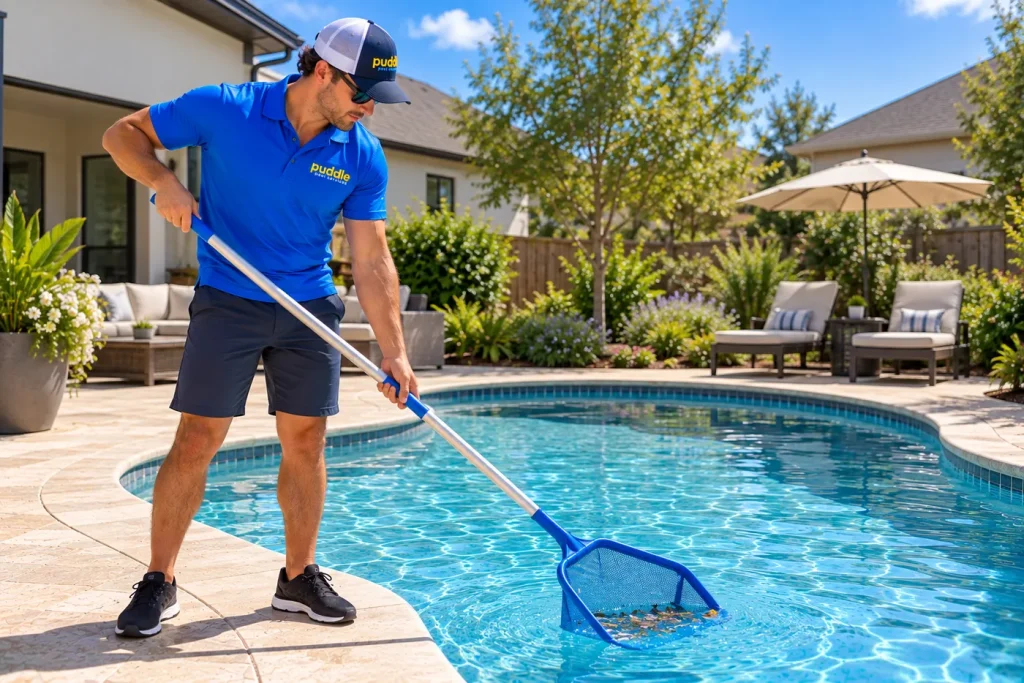
Ditch Debris: Robotic vacuum cleaners are great for sucking up unwanted debris from flat, open areas but pool structures are complicated. Vacuums aren’t capable of sucking up dust or algae, even once it’s been scrubbed off. They also can’t reach into hard angles or navigate steps. It takes manual vacuums and top techniques to clear debris out of corners for better visuals and cleaner water.
Scrub Surfaces: The surfaces of pools are built to be tough, but they’re still susceptible to wear, tear and damage. Harsh chemicals can degrade liners, and rough tools like wire brushes can cause tears. Puddle technicians use specialty tools and techniques to remove buildup and stains safely.
Check Pool Filters: Filtration systems often don’t get the attention that they deserve. A clogged filter creates resistance to water flow. This means pool pumps have to work harder to push water through filters. This means additional wear and tear, as well as shortened lifespans on components.