Durham NH Leak Detection
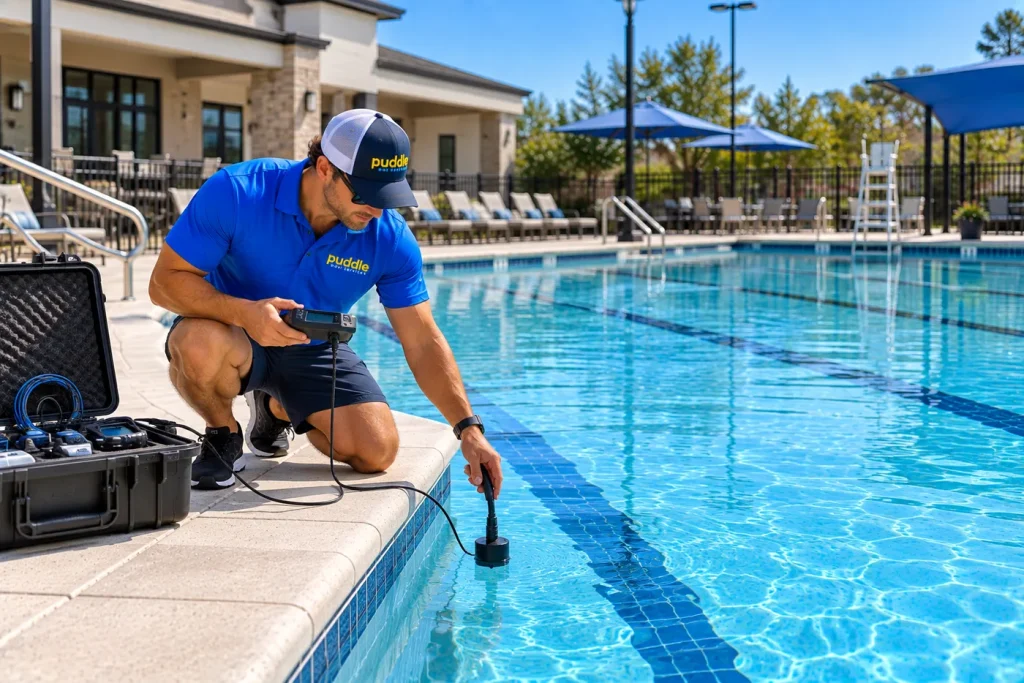
Puddle Pool Services provides pool and hot tub leak detection in Durham, New Hampshire and across the Seacoast around Portsmouth, Dover and Exeter. Pressure testing checks each plumbing line while dye testing pinpoints water escaping at fittings, skimmers, lights, returns and cracks, all without digging. You are then shown where the leak is and what the repair options are.
- Non-Invasive Testing
- Test Structures & Plumbing
- Fully Insured Staff
- Expert Leak Repair
- Pressure & Dye Testing
- 5-Star Rated

video: init
Leak or evaporation?
Some water loss is normal, especially in hot or windy weather and after a busy weekend of swimming. NOAA's 1991 to 2020 normals for Durham record a July average high of 82.5 F and about 15.1 days a year at or above 90 F, so a pool does lose some water on the hottest stretches. A leak becomes more likely when:
- the level keeps dropping faster than the weather explains
- it still drops with the pump switched off
- ground near the pool or the equipment stays wet
- you find yourself adding water every few days
A bucket test helps separate the two. Set a bucket of pool water on a step, mark both levels and compare them after a day. If the pool falls noticeably faster than the bucket, it is time for testing.
Why a leak costs more on well water
Many properties outside the Durham and Portsmouth systems rely on private wells. Every refill of a leaking pool comes out of that well. NHDES drought guidance lists dug wells, shallow bedrock wells and wells near topographic high points as the most prone to running short. It advises cutting nonessential outdoor use during drought. Dry spells are not hypothetical on the Seacoast either. Portsmouth DPW's Q2 2026 supply update reported that drought in the region began in June 2025. A pool that quietly loses water adds a steady draw on a well at exactly the wrong time. Finding the leak protects the well as much as the pool. It also saves the chemicals that drain away with every lost inch of treated water.
How drought limits work around the Seacoast
State law lets a town's governing body restrict outdoor lawn watering from private wells as well as public systems once state or federal agencies designate the region as under drought. Some neighboring communities write pools into their stages directly. Exeter's water ordinance prohibits filling swimming pools over 100 gallons at Level 4. Under a declared drought that rule reaches residential well users too. Rochester's code bans filling any swimming pool or container over 100 gallons at Level 3. Dover sets tiered lawn watering days by address for city water and private wells when drought is declared. A pool that leaks during one of those stages may not be refillable at all, which makes early testing the sensible move.
Pressure first, then dye
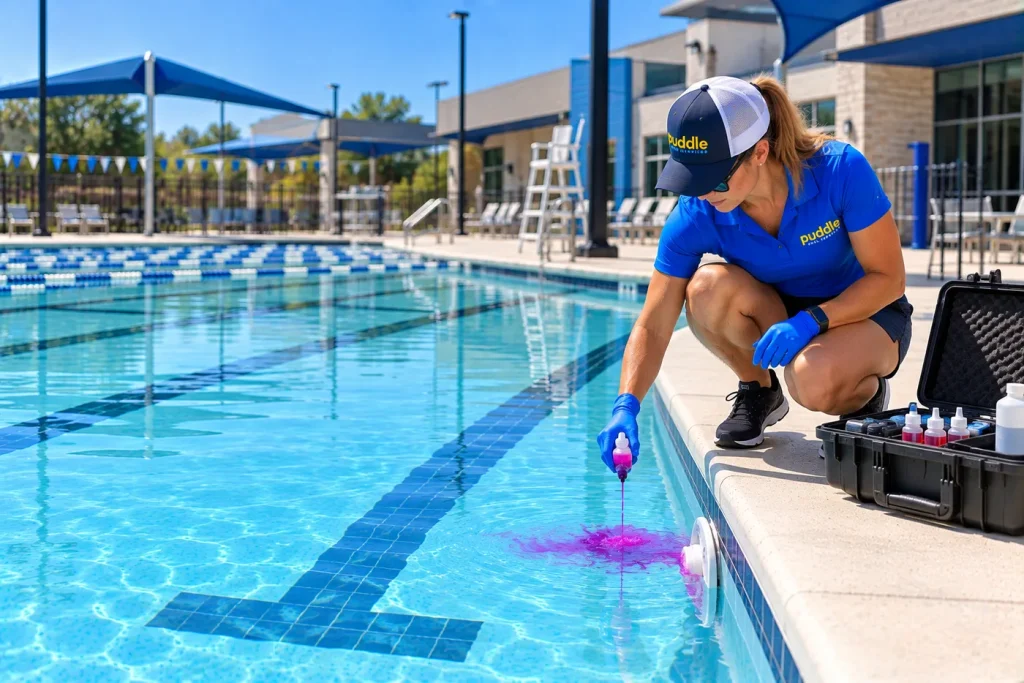
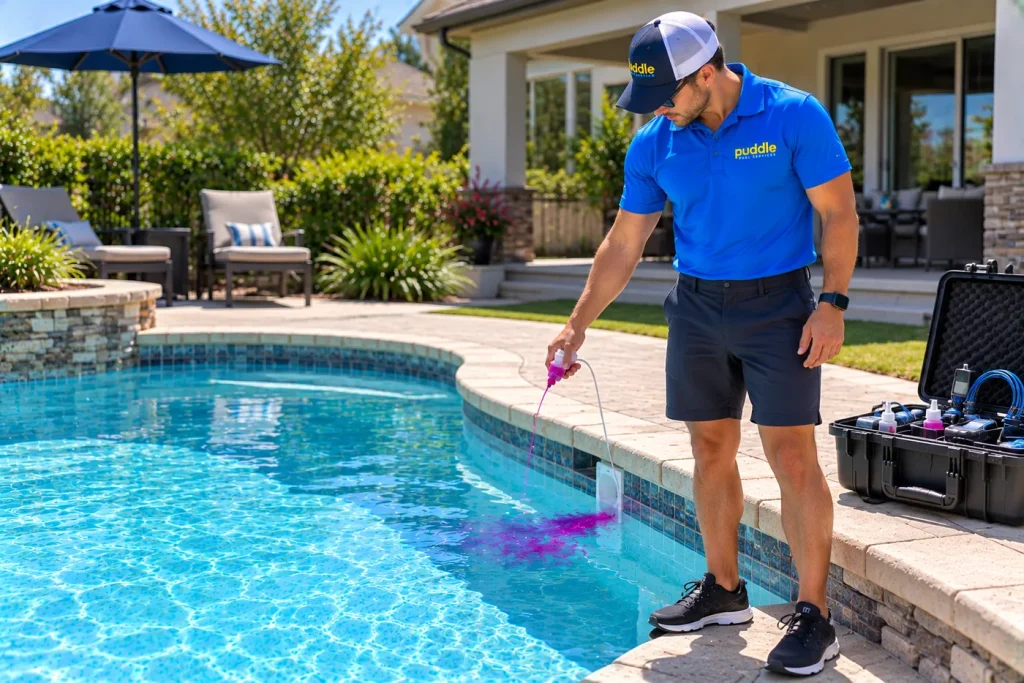
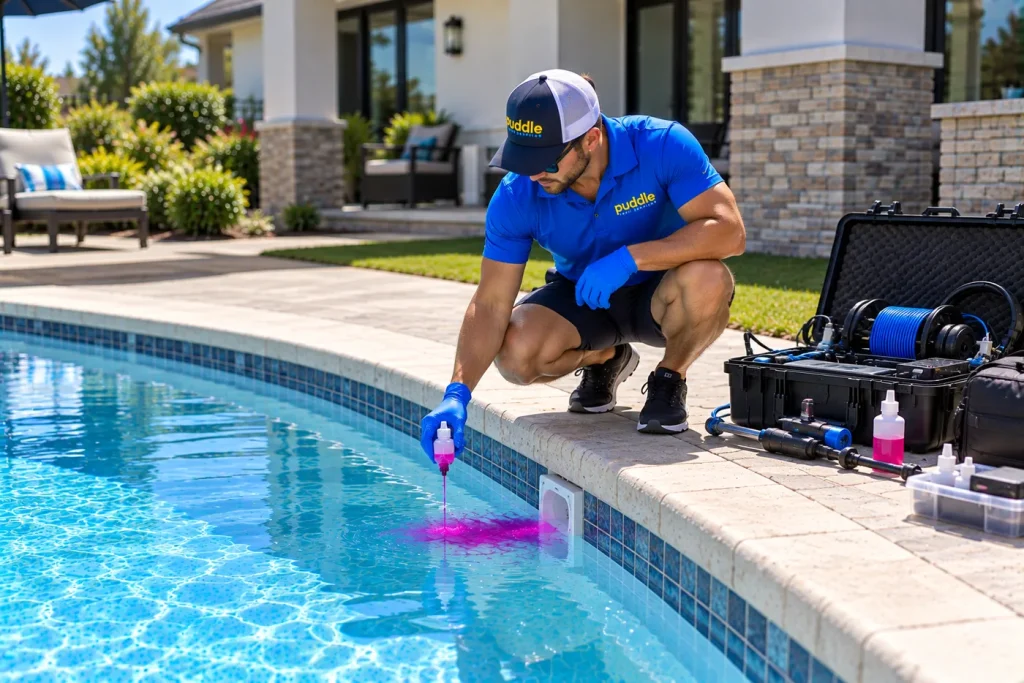
Your technician does not start by pulling up the deck. The first step isolates the plumbing: each line is pressurized on its own and watched to see whether it holds. A line that loses pressure points to a plumbing leak, while lines that all hold shift attention to the shell or liner. Dye is then released close to suspect spots such as fittings, skimmer throats, light niches, return jets and visible cracks, where escaping water pulls it in. Every line gets tested even when one fault seems obvious, since pools often leak in two places at once. None of this involves digging. If a break turns up in a buried line, the results narrow down where to open the ground. Hot tub plumbing and jets are checked the same way.
Helping the test and what comes next
Before the visit, keep the level high enough that the skimmer never sucks air and the pump never runs dry. Jot down each top up with the date and roughly how long the hose ran, because that log tells your technician how fast the pool is losing water. Mention a rapid drop when you book. Once testing is finished you are walked through where the water is getting out and how it can be fixed. Leaks at a fitting, skimmer, light or small crack are often repaired directly. Structural work or buried plumbing gets its own quote so you can weigh the options. Afterward, watch the level for a few days to confirm the loss has stopped.
Durham NH Leak Detection: Frequently Asked Questions
I fill my pool from a private well near Durham. What should I know?
The New Hampshire Department of Environmental Services says nearly half of the state's residents rely on private wells. NHDES notes that arsenic and radon occur naturally in New Hampshire rock and soil along with manganese and coliform bacteria, so it recommends regular testing. Its drought guidance also lists dug wells, shallow bedrock wells and wells near topographic high points as the most prone to running short. Spread a large fill out over time and share your latest well test with your technician.
Does Durham get hot enough in summer to affect my pool?
Yes. NOAA's 1991 to 2020 normals for the Durham station put the July average high at 82.5 F, with about 15.1 days a year at or above 90 F. Warm water uses up sanitizer faster and loses more to evaporation. Most pools in regular use do best with weekly service in summer. A level that keeps falling faster than the weather explains is worth a leak test.
Can I drain my pool into the storm drain in Durham?
Durham is on the EPA list of regulated New Hampshire communities under the Small MS4 General Permit. Part 1.4 of that permit lists dechlorinated swimming pool discharges among allowable discharges to the municipal storm system unless the town, EPA or the state identifies them as a significant pollutant source. Durham keeps an illicit discharge detection plan on its Stormwater page. Confirm the approved method with the Town before lowering or draining your pool.
Should I keep the pool running while I wait for a leak test?
Keep the water level above the skimmer so the pump does not run dry, and note how much water you add and when. That record helps the test. If the level is dropping quickly, tell us when you book so the visit can be prioritized.
Can a hot tub or spa leak be detected the same way?
Yes. Spas and hot tubs have plumbing, jets and fittings that can leak just like a pool. The same testing approach applies, adapted to the spa's equipment.
Watch what we do
-
Residential Services
-
Commercial Services
Other services we offer in Durham NH


Areas we serve
- Portsmouth
- Dover
- Exeter
- Rochester
- Hampton
- Lee
- Madbury
- Newmarket
- Stratham
- Somersworth
- Rye
- Salem
- Derry
- Windham
- Raymond
- Barrington
- Hampstead
- Seabrook
- Plaistow
- Epping
- Atkinson
- Farmington
- Sandown
- Kingston
- Auburn
- Chester
- Nottingham
- Deerfield
- Newton
- Fremont
Where you can find us
Talk to us
So Why Puddle for Leak Detection in Durham NH?
-
Transparent Pricing
That’s Right. No Hidden Prices. Up Front and Straight Forward Pricing.
-
E-Reports
Your Service Sent in an E-Report, in Real Time. What Was Done, What Chemicals Were Used, What Your Levels Are At etc. All With Before & After Pictures, Time Stamped In and Time Stamped Out.
-
Happy Snappy Techs
Fully uniformed, CPO certified technicians in fully wrapped vehicles, so you always know who is at your gate and that your pool is in trained hands.
Ready to book Leak Detection in Durham NH?
Book online in under a minute, or call and someone will actually pick up.

Accredited, certified and reviewed