Chicago Pool Closing
Puddle Pool Services closes and winterizes pools in Chicago and the north and northwest suburbs before the first hard freeze. A closing covers winter chemicals, a water level drawdown, a plumbing blow out, winter plugs, antifreeze in critical lines and a secured cover. An E-Report with time stamped photos confirms the work.
- Avoid Freezing & Damage
- Reduced risk of algae
- Vacuum debris & scrub pool walls
- Clean filter baskets & backwash system
- Easier Openings

video: init
Professional Chicago Winterization Checklist
Puddle Pool Services provides expert Chicago pool closing and winterization to protect your backyard investment from freezes. Our professional closing service includes high-pressure plumbing blow-outs, specialized winter chemical treatments and secure cover installation to prevent algae growth and structural damage. Every visit features a 'Happy Snappy' real-time digital report with time-stamped photos, ensuring your Chicago pool is sealed, safe and ready for a seamless spring opening.
-
Plumbing Blow-Out
We use high-volume air to clear all underground lines of water, preventing freeze damage in the Chicago off-season.
-
Anti-Freeze & Plugging
Installation of winter plugs and application of non-toxic antifreeze in critical lines to ensure absolute protection against expansion.
-
Winter Chemical Kit
Professional dose of winterizing algaecide and stain inhibitors to keep the water clear until the spring opening.
-
Water Level Drawdown
Lowering the pool level below the tiles or skimmers to prevent water from entering the plumbing during heavy rains or ice expansion.
-
Cover Security Check
We verify all springs, anchors or water bags are perfectly tensioned to withstand the Chicago winter wind and debris without shifting.
-
E-Report & Confirmation
Instant "Happy Snappy" confirmation with time-stamped photos of all lines being winterized and the cover being secured.
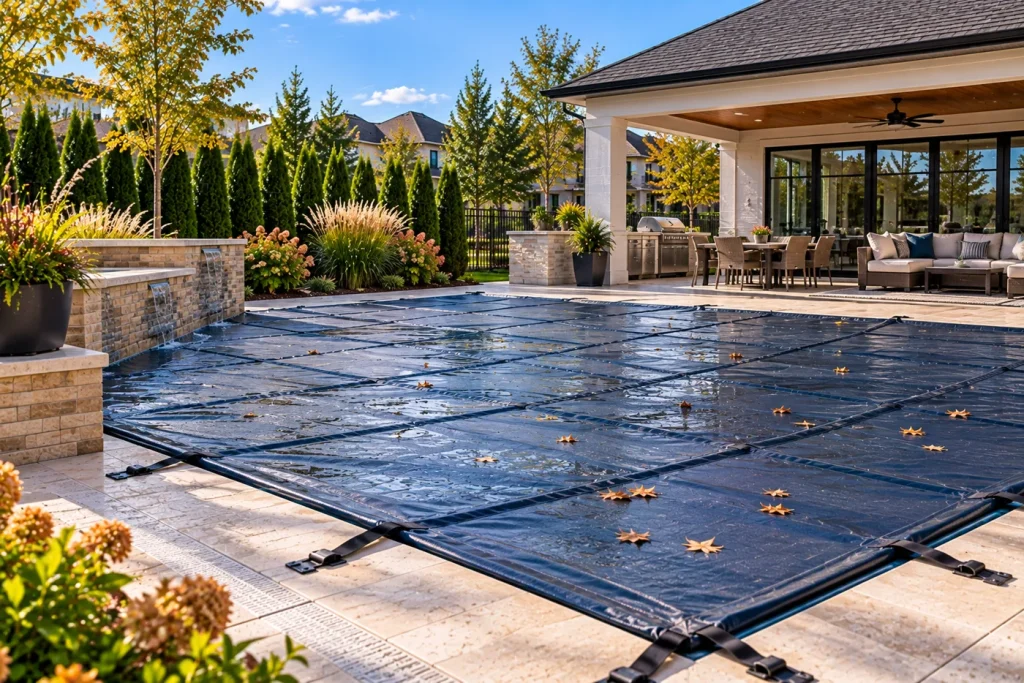
What a pool closing includes
Winter damage is done by water left in the plumbing and equipment, not by the pool being uncovered, so a closing is mostly about getting water out of the places it should not be. The visit balances the water and adds winter chemicals, lowers the water to the correct level, blows out the underground lines with high volume air, fits winter plugs and drains the pump, filter and heater. Non toxic antifreeze goes into critical lines as extra protection against freezing. Accessories are removed and stored and the cover is fitted and secured. The order matters, which is why it is done as one visit. You get an E-Report confirmation with time stamped photos of the lines being winterized and the cover being secured.
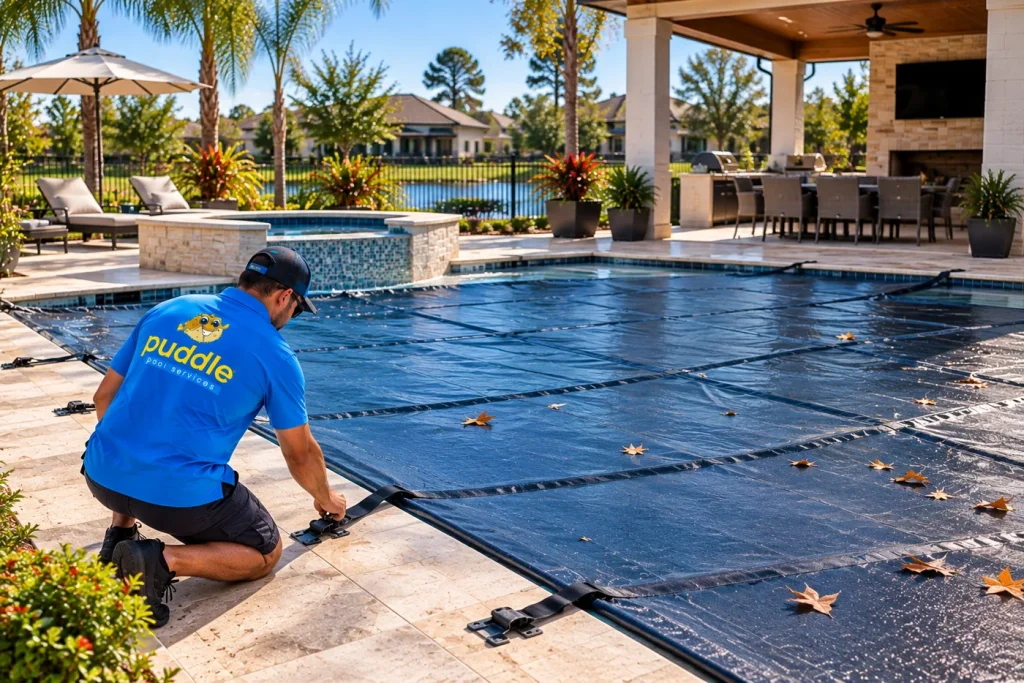
First freeze dates: when to book your closing
Close once the season is over and temperatures are consistently falling, but before the first hard freeze. NOAA's 1991 to 2020 normals give these median first fall freeze dates:
- Hinsdale (Midway): October 31
- Chicago's north and northwest side, Des Plaines and Park Ridge (O'Hare): October 28
- Arlington Heights (Chicago Executive Airport in Wheeling): October 26
- North shore from Wilmette to Highland Park (Chicago Botanic Garden in Glencoe): October 21
- Barrington (Barrington 3SW) and Lake Forest (Waukegan): October 19
Barrington and Lake Forest reach their median first freeze about nine days before O'Hare. Closing too early while the water is still warm can let algae establish under the cover, so the aim is the gap between cooling water and that first freeze.
Where the water goes: draining rules by village
Lowering the water for winter means discharging it. MWRD's ordinances contain no swimming pool water provision, so each municipality sets its own rule:
- Chicago: the pool must drain to the sewer through an indirect connection at no more than 250 gallons per minute and never during a rainstorm.
- Wilmette: water goes to the curb or gutter leading directly to a stormwater inlet through a filter bag, with no direct connection to the storm or sanitary system.
- Winnetka: village guidelines recommend dechlorinating first or letting the water sit at least 2 days in sunlight, then draining over several days across the lawn, not down the driveway or into storm inlets.
- Lake Forest: drainage goes to the sanitary sewer through an indirect waste. Storm drain discharge is allowed only if the water is dechlorinated.
- Skokie: discharge to the sewer at no more than 100 gallons per minute, with no direct connection and no draining during rain or storms.
Confirm the method with your village before any water leaves the pool.
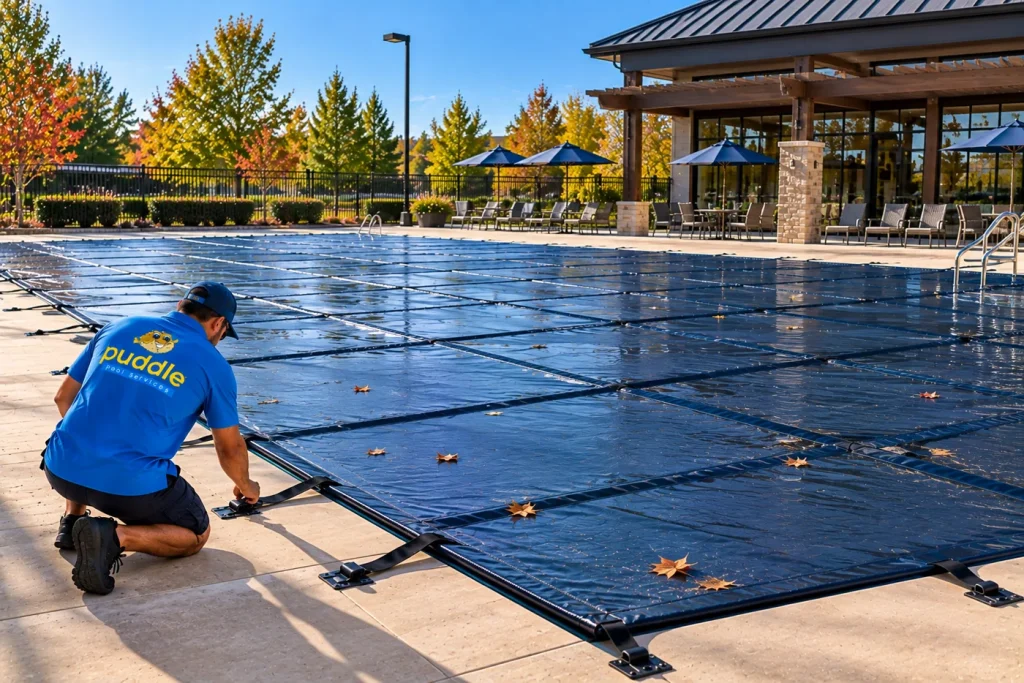
Chicago's off season rule and winter covers
Chicago's Department of Buildings guidance, which covers pools over 48 inches deep on one, two and three unit lots, says outdoor private residential pools must be drained and covered outside the June 1 to September 15 use season. That differs from the usual approach elsewhere, where the water is lowered rather than emptied because it helps hold the structure in place against ground pressure. If your pool is inside the city, confirm with the Department of Buildings what applies before closing and mention it when you book. Suburban codes focus on the cover. Glenview requires a protective cover over residential pools in the non swimming season. Park Ridge requires a sturdy protective cover whenever the recirculation system is off for more than 24 hours.
Looking after the cover through winter
Snow adds weight to a winter cover. NOAA normals show about 38.4 inches of snow a year at O'Hare, 33.6 inches at the Chicago Botanic Garden in Glencoe and 38.5 inches near Barrington. Clear heavy accumulations of leaves, snow or standing water where you can do so safely from the edge, since sustained weight shortens a cover's life and stresses its anchors. Never walk on a cover to do it. O'Hare also averages about 121.3 nights a year at or below 32 F, which is why the blow out and antifreeze matter so much. If something looks wrong with the cover or the water level during winter, it is better checked than guessed at.
Chicago Pool Closing: Frequently Asked Questions
Can I drain my pool into the sewer in Chicago?
Yes, but the Department of Buildings guidance on residential swimming pools sets the method. The pool must drain to the sewer system through an indirect connection at no more than 250 gallons per minute. It must not discharge to the sewer during a rainstorm. Confirm the details with the Department of Buildings before draining.
When should I close my pool in Chicago?
Close once the season is over and temperatures are falling, but before the first hard freeze. At O'Hare, NOAA's 1991 to 2020 normals put the median first fall freeze on October 28 and the October average high at 62.7 F. On the north shore the Glencoe station's median is October 21, so plan a little earlier there. Pools, outdoor water features and hot tubs you do not plan to use should be closed or shut down before then.
When can outdoor residential pools be used in Chicago?
The Department of Buildings guidance limits outdoor private residential pools to use from June 1 to September 15, between 8 a.m. and 10 p.m. The same guidance says they must be drained and covered the rest of the year. It applies to pools deeper than 48 inches on lots with 1 to 3 dwelling units, so confirm with the Department of Buildings how it applies to your pool.
Does a safety cover need anything over winter?
It is worth clearing heavy accumulations of leaves, snow or standing water where you can do so safely from the edge, since sustained weight shortens a cover's life and stresses its anchors. Never walk on a cover to do it. If something looks wrong, it is better checked than guessed at.
What is a plumbing blow out?
It uses high volume air to clear water out of the underground lines, so there is nothing left in them to freeze and crack the pipes over winter.
Watch what we do
-
Residential Services
-
Commercial Services
Other services we offer in Chicago


Areas we serve
- Evanston
- Skokie
- Lincolnwood
- Park Ridge
- Des Plaines
- Glenview
- Wilmette
- Winnetka
- Northbrook
- Highland Park
- Lake Forest
- Deerfield
- Arlington Heights
- Mount Prospect
- Palatine
- Wheeling
- Buffalo Grove
- Schaumburg
- Hoffman Estates
- Barrington
- Vernon Hills
- Libertyville
- Lake Zurich
- Crystal Lake
- McHenry
- Elgin
- St. Charles
- Elmhurst
- Hinsdale
Where you can find us
Talk to us
So Why Puddle for Pool Closing in Chicago?
-
Transparent Pricing
That’s Right. No Hidden Prices. Up Front and Straight Forward Pricing.
-
E-Reports
Your Service Sent in an E-Report, in Real Time. What Was Done, What Chemicals Were Used, What Your Levels Are At etc. All With Before & After Pictures, Time Stamped In and Time Stamped Out.
-
Happy Snappy Techs
Fully uniformed, CPO certified technicians in fully wrapped vehicles, so you always know who is at your gate and that your pool is in trained hands.
Ready to book Pool Closing in Chicago?
Book online in under a minute, or call and someone will actually pick up.

Accredited, certified and reviewed