Chicago Leak Detection
Puddle Pool Services provides pool and hot tub leak detection in Chicago and the north and northwest suburbs. Pressure testing checks each plumbing line and dye testing pinpoints leaks at fittings, skimmers, lights, returns and cracks, all without digging. You are then shown where the water is escaping and what the repair options are.
- Non-Invasive Testing
- Test Structures & Plumbing
- Fully Insured Staff
- Expert Leak Repair
- Pressure & Dye Testing
- 5-Star Rated

video: init
Leak or evaporation? Reading your water level
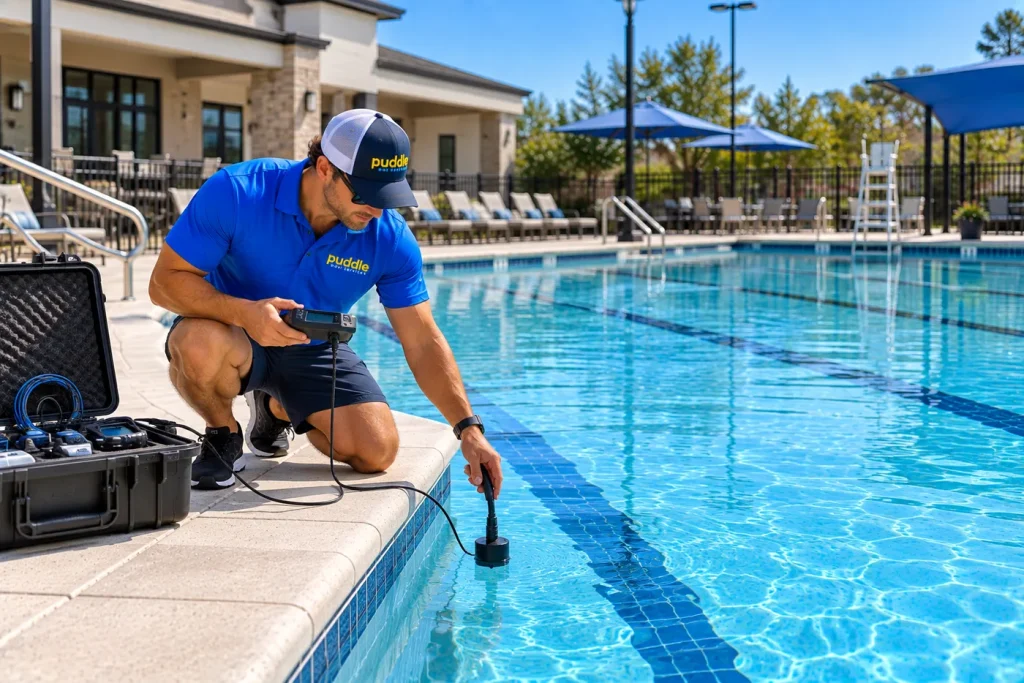
Some water loss is normal, especially in hot or windy weather and after heavy use. NOAA normals at O'Hare show a July average high of 84.5 F and about 16.7 days a year at or above 90 F, so a pool in Chicago, Park Ridge or Des Plaines does lose water on the hottest stretches. The Barrington station sees only about 6.3 such days, so a steady drop there is harder to blame on the weather. A leak is more likely when the level keeps falling faster than the weather explains, when it drops even with the pump off, when ground near the pool or equipment stays wet or when you are adding water every few days. A bucket test helps separate the two: set a bucket of pool water on a step and compare the two levels after a day.
How pressure and dye testing find the source
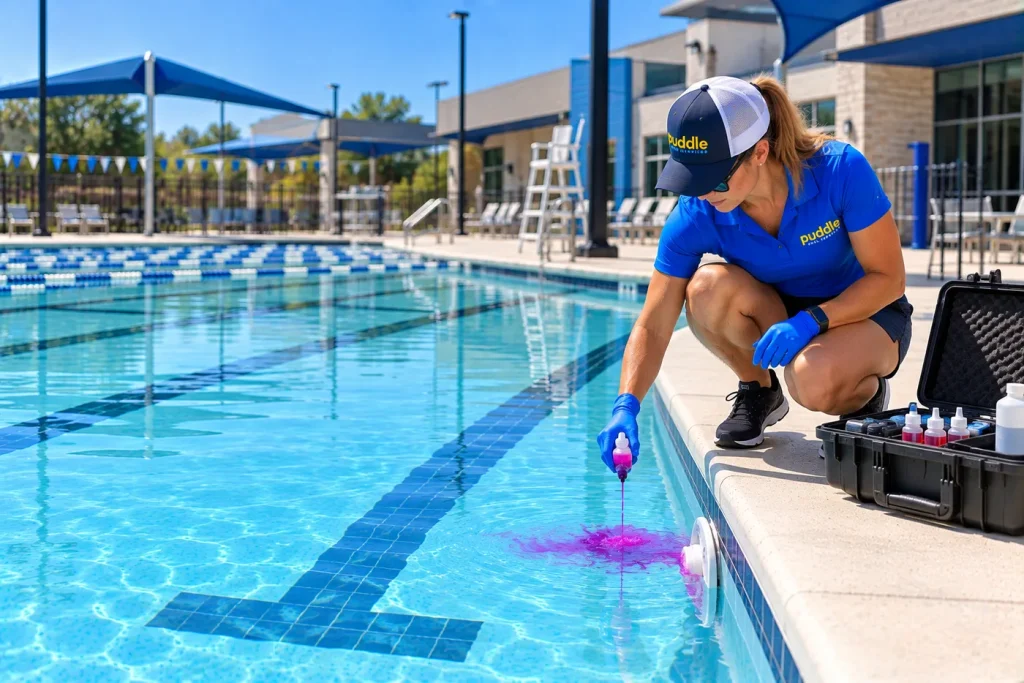
Testing works in stages rather than by guessing. Pressure testing checks each plumbing line individually to see whether it holds, which is how a plumbing leak is told apart from a leak in the shell or liner. Dye testing then shows where water escapes at fittings, cracks, lights, skimmers and returns. Both matter because a pool can leak in more than one place. A second leak is easy to miss when the first one seems obvious, so all the lines are tested even when the cause looks clear. Detection itself is non invasive: the tests run from the pool and the equipment, with no digging. Excavation only comes up if a leak is confirmed in an underground line. In that case the testing shows where to open up. Hot tubs and spas are tested the same way, adapted to their jets and plumbing.
Why a leak matters more in a water shortage
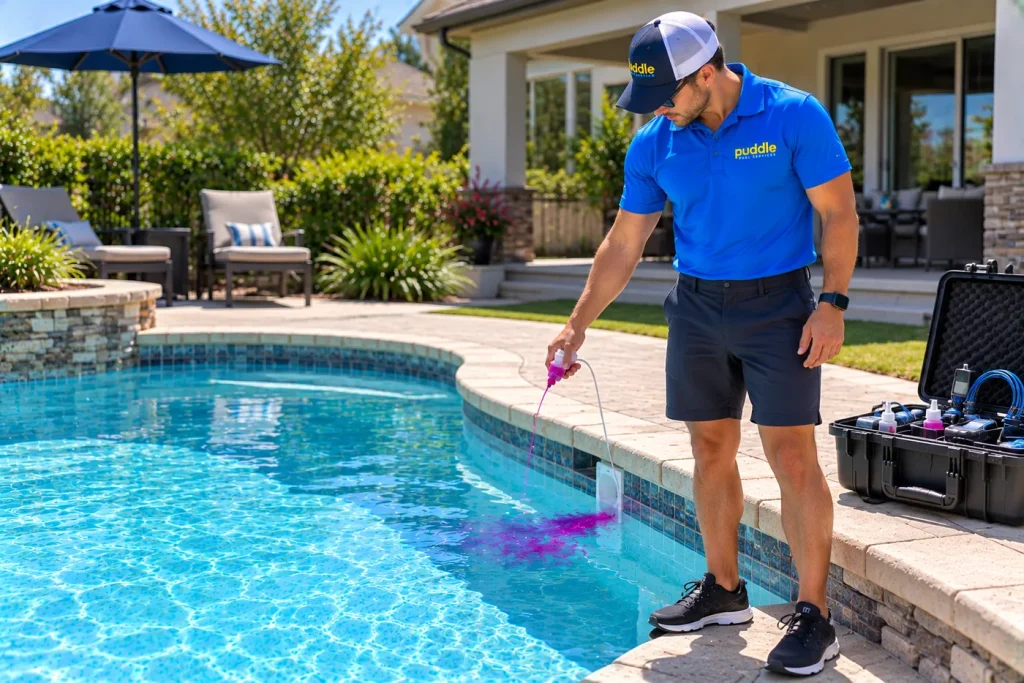
Illinois rules for communities with a Lake Michigan allocation require ordinances that stop unrestricted lawn sprinkling from May 15 through September 15. Those state rules do not address pool filling, but several villages give themselves that power. Wilmette's code lets the Village Engineer restrict filling or refilling swimming pools after an emergency declaration. Arlington Heights allows immediate restrictions on outdoor uses, expressly including swimming pool filling, during a supply interruption or emergency. Park Ridge bars drawing city water to fill a pool when the City Manager determines a shortage exists. Glenview has a similar rule tied to a shortage determined by the village president. A pool that needs topping up every few days depends on water you may not always be able to use, which is a good reason to find the leak early.
Topping up without a cross connection
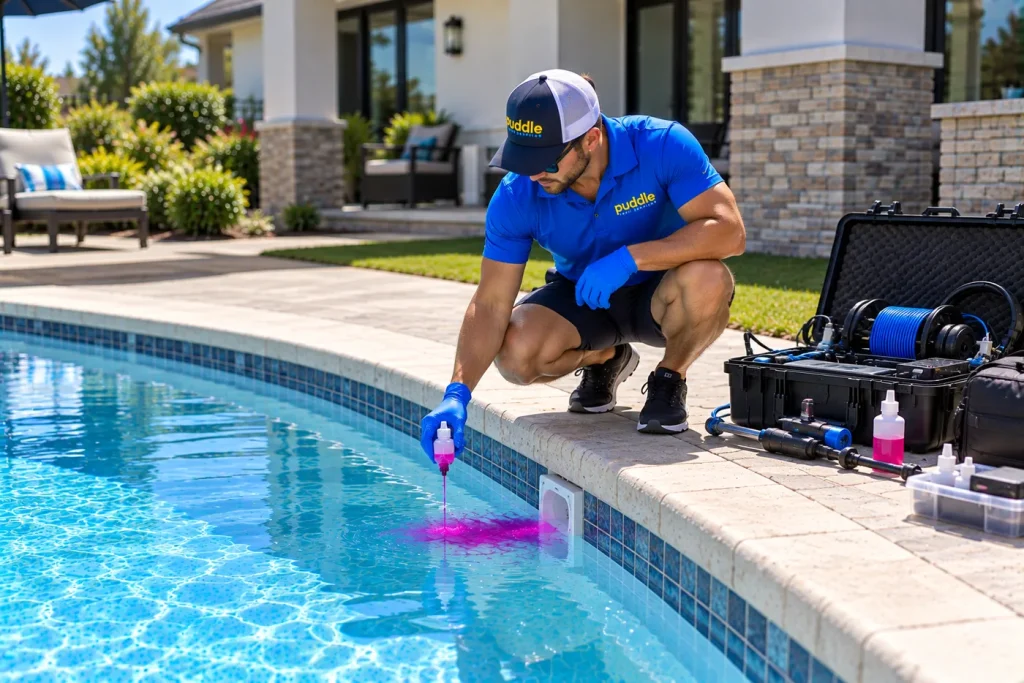
While you wait for a test, keep the water above the skimmer so the pump does not run dry. Note how much water you add and when, because that record helps the test. If the level is dropping quickly, tell us when you book so the visit can be prioritized. Village plumbing rules also shape how you add water. Skokie allows only Village waterworks water in private residential pools and requires an air gap on makeup water, with no physical connection and the outlet at least 6 inches above the pool's flood level. Park Ridge lists swimming pool fills among the residential backflow preventers that need annual testing through its Aqua Backflow program. In Chicago the municipal code bars anyone from opening or taking water from a fire hydrant without permission, so a hydrant is never a shortcut for refilling a pool.
What happens once the leak is found
You are shown where the leak is and given the repair options. Many leaks at fittings, skimmers, lights or small cracks can be repaired directly, while larger structural or underground plumbing repairs are quoted separately so you can decide with the full picture. Fixing even a small leak matters. A pool holds a large volume of water. Treated water that keeps escaping makes the chemistry impossible to hold, strains the pump and circulation system and can damage landscaping and the surrounding structure over time. If you have a hot tub or spa, the same testing approach applies to its plumbing, jets and fittings. Because leak detection and repair work together, the fix targets the place the testing identified instead of a guess.
Chicago Leak Detection: Frequently Asked Questions
Can I drain my pool into the sewer in Chicago?
Yes, but the Department of Buildings guidance on residential swimming pools sets the method. The pool must drain to the sewer system through an indirect connection at no more than 250 gallons per minute. It must not discharge to the sewer during a rainstorm. Confirm the details with the Department of Buildings before draining.
How should I drain my pool in Winnetka?
Winnetka's Swimming Pool Draining Guidelines recommend either dechlorinating the water first or letting it sit at least 2 days in sunlight without added chlorine or bromine, then testing it to below 0.1 mg/L. Drain it over several days across the lawn, not down the driveway or into storm inlets, because Winnetka's storm sewers lead directly to wetlands, streams, lakes or rivers. Check with the village before draining.
Can I fill my pool with a garden hose in Chicago?
Yes, with care. The Department of Buildings guidance says a hose used to fill a pool must never have its end submerged in the pool water, which prevents backflow into the supply. Plan based pools need either a permanent six inch air gap above the rim or a vacuum breaker on the sill cock. If you find yourself topping up often, a leak test is worth booking.
How do you find a pool leak?
We test the pool in stages rather than guessing. Pressure testing tells us whether the plumbing lines are holding, and dye testing shows where water is escaping at fittings, cracks, lights, skimmers and returns. Checking both the structure and the plumbing matters, because a pool can leak from more than one place.
Is leak detection invasive? Will you need to dig up my yard?
Detection itself is non invasive. Pressure and dye testing are done from the pool and the equipment, without digging. Excavation only comes into the conversation if a leak is confirmed in an underground line, and then the testing tells us where to open up rather than searching blindly.
Watch what we do
-
Residential Services
-
Commercial Services
Other services we offer in Chicago


Areas we serve
- Evanston
- Skokie
- Lincolnwood
- Park Ridge
- Des Plaines
- Glenview
- Wilmette
- Winnetka
- Northbrook
- Highland Park
- Lake Forest
- Deerfield
- Arlington Heights
- Mount Prospect
- Palatine
- Wheeling
- Buffalo Grove
- Schaumburg
- Hoffman Estates
- Barrington
- Vernon Hills
- Libertyville
- Lake Zurich
- Crystal Lake
- McHenry
- Elgin
- St. Charles
- Elmhurst
- Hinsdale
Where you can find us
Talk to us
So Why Puddle for Leak Detection in Chicago?
-
Transparent Pricing
That’s Right. No Hidden Prices. Up Front and Straight Forward Pricing.
-
E-Reports
Your Service Sent in an E-Report, in Real Time. What Was Done, What Chemicals Were Used, What Your Levels Are At etc. All With Before & After Pictures, Time Stamped In and Time Stamped Out.
-
Happy Snappy Techs
Fully uniformed, CPO certified technicians in fully wrapped vehicles, so you always know who is at your gate and that your pool is in trained hands.
Ready to book Leak Detection in Chicago?
Book online in under a minute, or call and someone will actually pick up.

Accredited, certified and reviewed