Saratoga Leak Detection
Puddle Pool Services finds pool and hot tub leaks in Saratoga and nearby Los Gatos, Campbell, Los Altos and Mountain View. Pressure testing checks each plumbing line and dye testing pinpoints water escaping at fittings, skimmers, lights, returns and cracks, without digging up your yard. You are then shown where the leak is and what the repair options are.
- Non-Invasive Testing
- Test Structures & Plumbing
- Fully Insured Staff
- Expert Leak Repair
- Pressure & Dye Testing
- 5-Star Rated

video: init
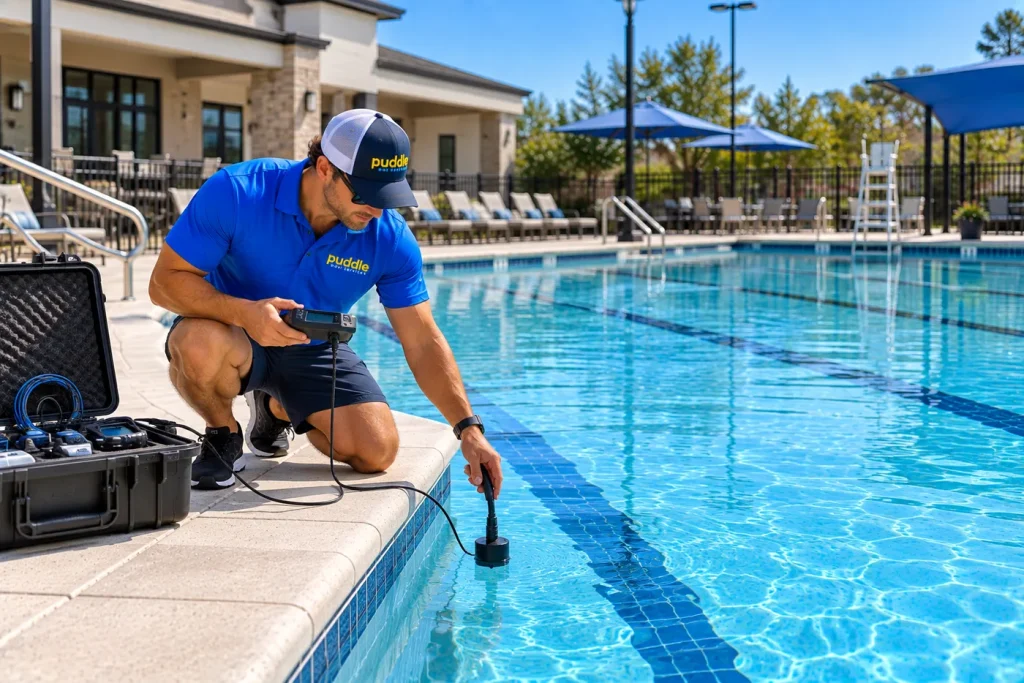
Evaporation or a leak in a rainless summer
Some water loss is expected through a dry summer. NOAA's 1991 to 2020 normals at the Los Gatos station show June through September each averaging 0.15 inches of rain or less, with July at none. The same station records about 26.7 days a year at or above 90 F. With no rain topping the pool up, the level falls steadily through those months. Hot, dry weather speeds that along. A leak becomes more likely when the level drops faster than the weather explains, when it keeps dropping with the pump off, when the ground near the pool or equipment stays damp or when you find yourself adding water every few days. A bucket test helps tell the two apart. Set a bucket of pool water on a step, mark both levels and compare them after a day.
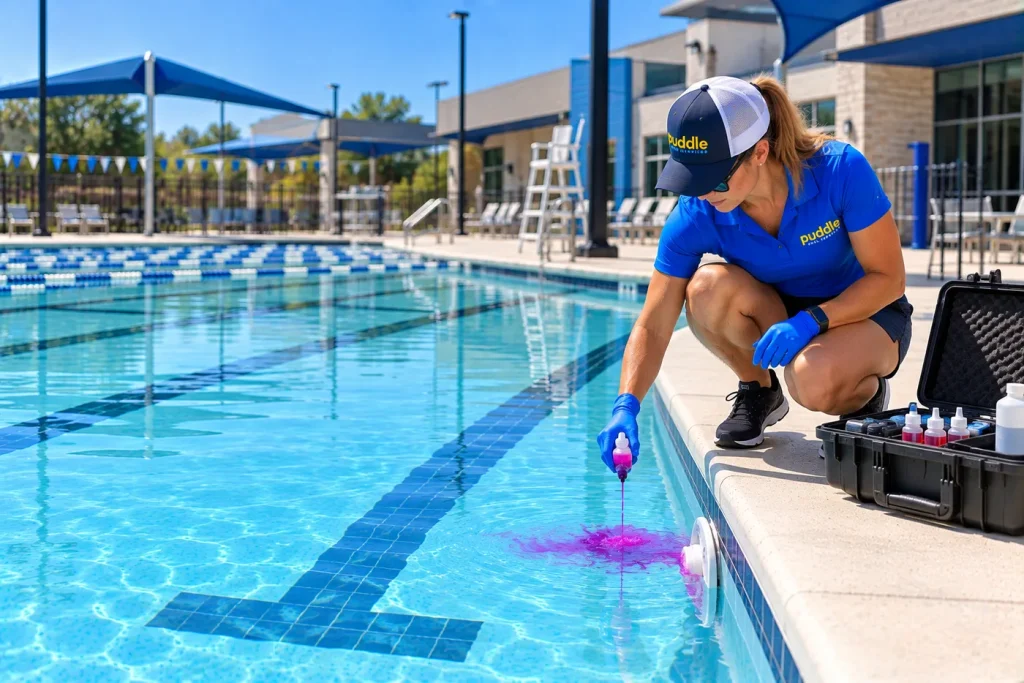
How pressure and dye testing find the source
Testing works in stages instead of guesses. Pressure testing isolates each plumbing line in turn to show whether it holds, which is how a plumbing leak is told apart from a leak in the shell or liner. Dye testing then shows water moving out at fittings, cracks, lights, skimmers and returns. Every line gets tested even when one leak looks obvious, because a pool can lose water in more than one place. The work is done from the pool and the equipment, so detection itself involves no digging. If a leak turns out to be in an underground line, the results show where to open up instead of searching blindly. Hot tubs and spas are tested the same way, adapted to their jets and plumbing. Before the visit, keep the water above the skimmer so the pump never runs dry and note how much you add and when.
Why a leak matters when shortage stages are called
Water suppliers here set out in advance what happens to pool filling in a shortage. Under San Jose Water's Water Shortage Contingency Plan (Tariff Rule 14.1), which covers Saratoga and Los Gatos, Stage 4 prohibits using potable water to fill or refill a residential pool or spa by more than one foot. Stage 5 prohibits filling or refilling one with potable water at all. Campbell's Stage 3 allows only topping off to within one foot of the top. Mountain View prohibits filling pools or spas with potable water during a declared Stage 3 or Stage 4 shortage, while Cal Water's Stage 4 in Los Altos prohibits filling swimming pools. A leaking pool can lose more than you are allowed to put back. Valley Water's permanent water waste ordinance also requires leaks to be repaired after written notice. Mountain View's rules in effect at all times call for leaks to be fixed within ten days.
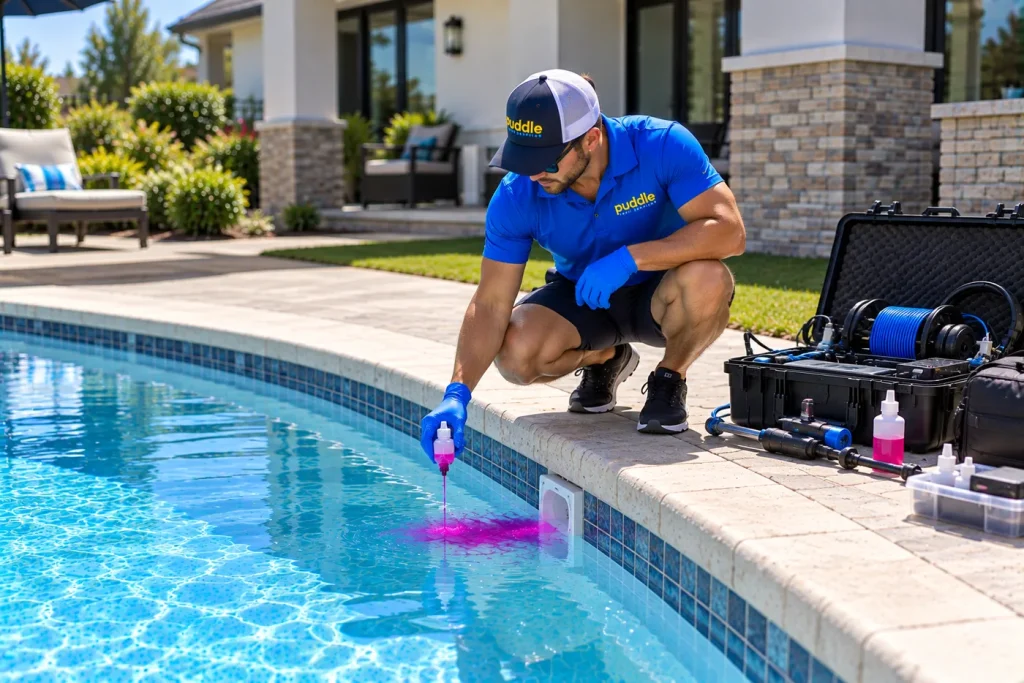
Refilling and draining around a repair
The shortage rules recognize that a repair sometimes means draining. San Jose Water's Stage 4 limit makes an exception for pools and spas drained for repairs. Campbell exempts leaking pools that need repair from its Stage 3 limit. When water does have to come out, keep it out of the gutter. Saratoga City Code 7-12.020 bars discharging polluted water into a storm drain or watercourse. Regional guidance from the Santa Clara Valley Urban Runoff Pollution Prevention Program points to a sanitary sewer clean out instead. Los Gatos and Campbell list dechlorinated pool water among discharges the Regional Water Quality Control Board treats as permissible, while Los Altos makes discharging pool or spa water to the storm drain unlawful and allows it into the sanitary sewer only through a discharge pipe no larger than two inches with an approved separator that keeps sewage from backing into the pool. Check with your own city before any draining starts.
What happens once the leak is found
You are shown where the water is escaping and what the repair options are. Many leaks at fittings, skimmers, lights or small cracks can be repaired directly. Larger structural or underground plumbing repairs are quoted separately so you can decide with the whole picture in front of you. A small leak is worth fixing even when the water loss seems minor. Treated water keeps escaping, which makes the chemistry impossible to hold. The pump and circulation system are put under strain as well. Water escaping into the ground can damage landscaping and, over time, the structure around the pool. Hard fill water adds one more reason. Every top up brings in fresh minerals. Saratoga Creek supply measures 151 mg/L of hardness, so a pool that needs constant refilling tends to gather scale faster.
Saratoga Leak Detection: Frequently Asked Questions
Can I drain my pool or spa into the street in Saratoga?
No. Saratoga City Code 7-12.020 bars discharging any pollutant or water containing a pollutant into a storm drain or watercourse. Section 7-12.010 counts chemical discharges as pollutants. Regional guidance from the Santa Clara Valley Urban Runoff Pollution Prevention Program says to send pool and spa water to a sanitary sewer clean out instead, because storm drains flow to creeks and the Bay untreated. Confirm with the City before draining.
Do I need a permit to drain my pool to the sewer clean out in Saratoga?
Possibly. West Valley Sanitation District serves two thirds of Saratoga. Section 7.100 of its ordinance code bars discharging storm water, surface water, groundwater, subsurface drainage or roof water to the sanitary sewer without a district permit. The code has no section written specifically for pool water. Confirm with the district before draining a pool to a clean out.
Can I fill my pool in Saratoga during a water shortage?
San Jose Water, which serves Saratoga, sets pool limits by stage in its Water Shortage Contingency Plan (Tariff Rule 14.1). At Stage 4 you cannot use potable water to fill or refill a residential pool or spa by more than one foot, except when it was drained for repairs. At Stage 5 filling or refilling with potable water is prohibited. A leak makes those limits much harder to live with, so it is worth finding one early.
Can a hot tub or spa leak be detected the same way?
Yes. Spas and hot tubs have plumbing, jets and fittings that can leak just like a pool. The same testing approach applies, adapted to the spa's equipment.
Does a vinyl liner pool leak differently from a concrete pool?
The usual suspects differ. Vinyl liners tend to leak through tears, punctures or around fittings and faceplates, while concrete and plaster pools are more likely to leak through cracks or at tile lines, lights and returns. Dye testing works on both.
Watch what we do
-
Residential Services
-
Commercial Services
Other services we offer in Saratoga


Areas we serve
- Mountain View
- Los Gatos
- Los Altos
- Campbell
Where you can find us
Talk to us
So Why Puddle for Leak Detection in Saratoga?
-
Transparent Pricing
That’s Right. No Hidden Prices. Up Front and Straight Forward Pricing.
-
E-Reports
Your Service Sent in an E-Report, in Real Time. What Was Done, What Chemicals Were Used, What Your Levels Are At etc. All With Before & After Pictures, Time Stamped In and Time Stamped Out.
-
Happy Snappy Techs
Fully uniformed, CPO certified technicians in fully wrapped vehicles, so you always know who is at your gate and that your pool is in trained hands.
Ready to book Leak Detection in Saratoga?
Book online in under a minute, or call and someone will actually pick up.

Accredited, certified and reviewed