Saratoga Water Feature Maintenance
Puddle Pool Services looks after residential and commercial fountains and water features in Saratoga and nearby Los Gatos, Campbell, Los Altos and Mountain View, as well as waterfalls and spillways that share a pool’s water. A visit balances the chemistry, removes debris and staining and inspects circulation and filtration from top to bottom. The cleaning method suits the material, whether that is natural stone, a liner or a feature with lighting.
- Balance Water Chemistry
- Removal of debris and stains
- Access to specialized tools
- Individualized treatment plans
- Regular inspections of circulation and filtration systems

video: init
The features we maintain
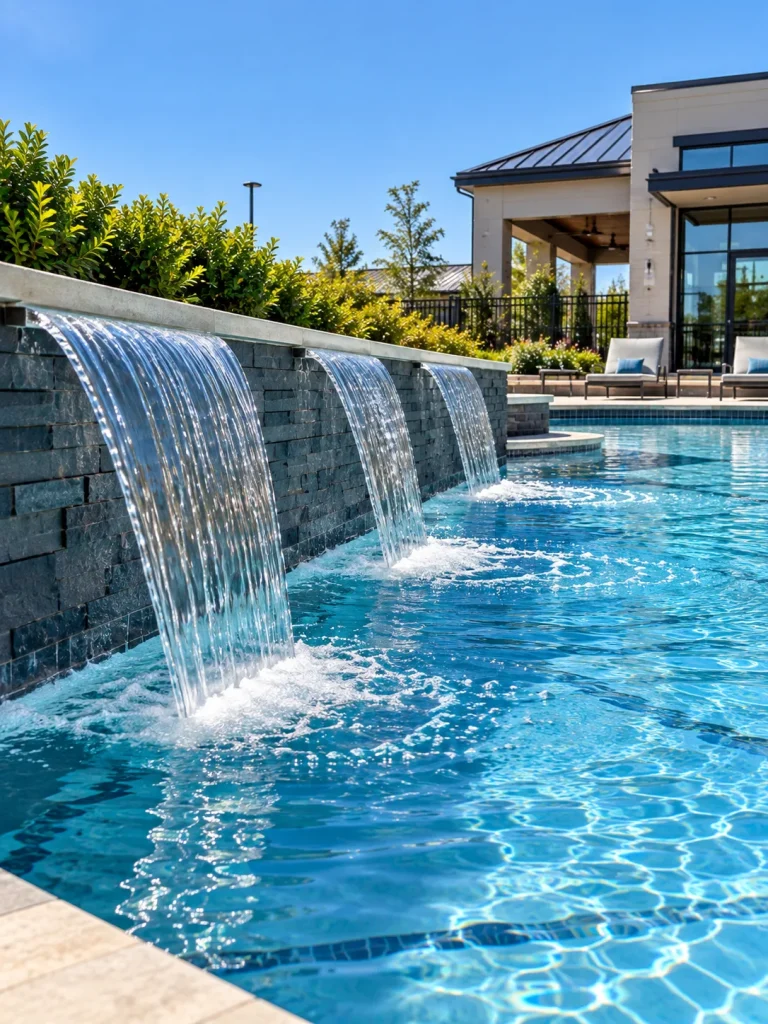
Water features range from a small courtyard fountain at home to large commercial pieces at hotels and shopping centers, indoors or out. Features built into a pool, such as waterfalls and spillways, share the pool's water and circulation, so they are cared for as part of the pool. Each feature gets a treatment plan suited to its size, age and materials. A visit balances the water, removes debris and stains and inspects the pump, filter and plumbing, working from the top down so a clog in one part does not undo the cleaning below it. Natural stone, liners and LED lighting each need different handling. A heavy handed clean can do real damage, so the method follows the material. Fountains still need treatment even though nobody swims in them, since debris, bacteria and whatever visitors toss in all push the water out of balance.
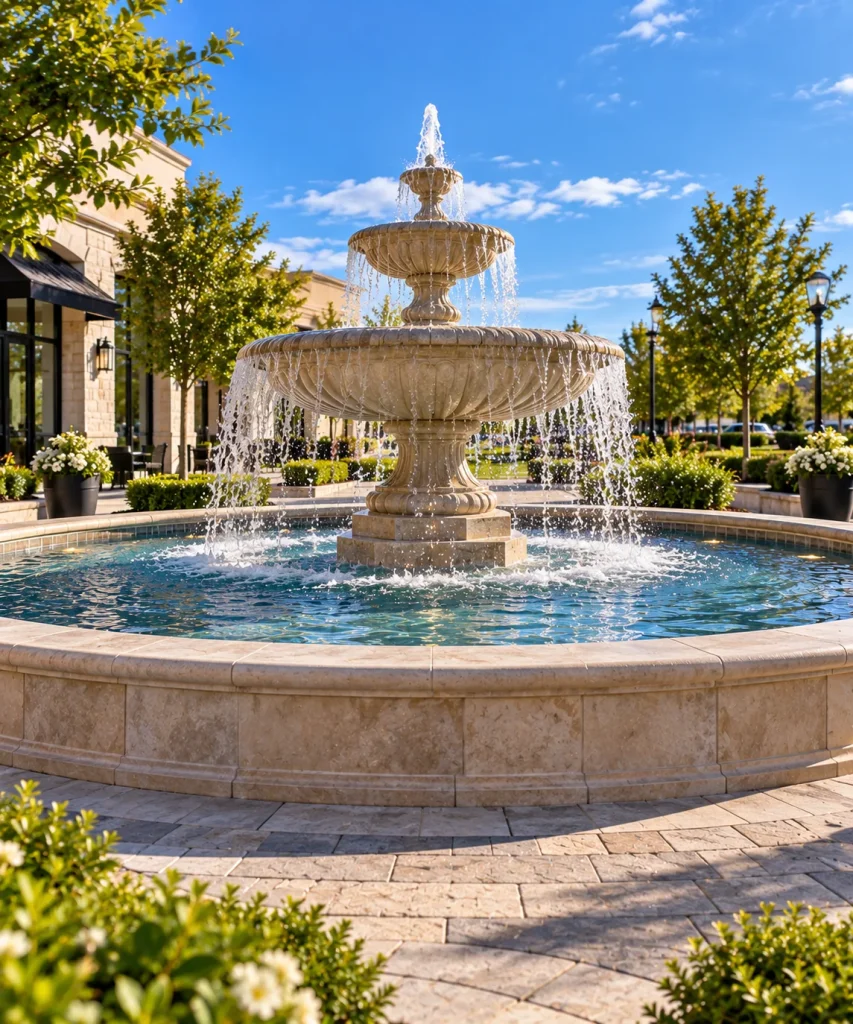
Dry summers and a feature that keeps losing water
A fountain throws water into warm, dry air, so some loss is expected. At the Los Gatos station, NOAA's 1991 to 2020 normals show a July average high of 84.9 F, with June through September each averaging 0.15 inches of rain or less. Mountain View's Moffett Federal Airfield station is milder at a July average high of 76.9 F, yet each of those months still averages 0.10 inches of rain or less. Splash and evaporation account for part of the drop. Faster loss can point to a leak, a clogged line sending water where it should not go or a plumbing fault, which an inspection of the circulation system will track down. Outdoor features that catch debris usually need more frequent visits than indoor ones. The schedule is set as part of the treatment plan and adjusted through the year.
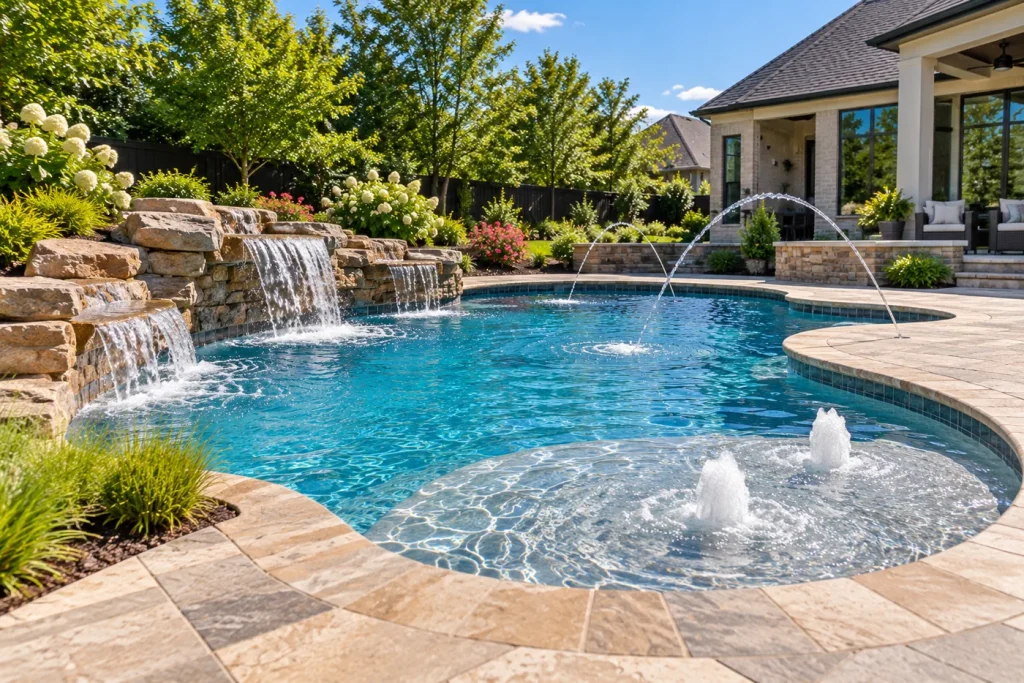
Phosphate, algae and the rules on additives
Algae is the most common fountain complaint and what feeds it matters. The 2025 water quality reports for Mountain View and Los Altos list orthophosphate at 1.0 to 1.2 mg/L in Valley Water treated supply. That is the supply for Mountain View south of Cuesta Drive in normal operation and about 72 percent of the Los Altos blend. San Jose Water's FAQ says phosphate in its system never exceeds 1.5 mg/L and that high levels usually come from fertilizer, detergents or organic debris rather than tap water.
How algae is treated is regulated too. Los Altos and Mountain View both limit copper in any additive put into a pool, spa or fountain and prohibit devices that use electricity to dissolve copper or silver into the water. Mountain View also bars additives containing any zinc. The Santa Clara Valley Urban Runoff Pollution Prevention Program warns that draining pools and spas can carry copper, chlorine and sediments into creeks. All of that points the same way: steady balancing and cleaning that stop algae from taking hold.
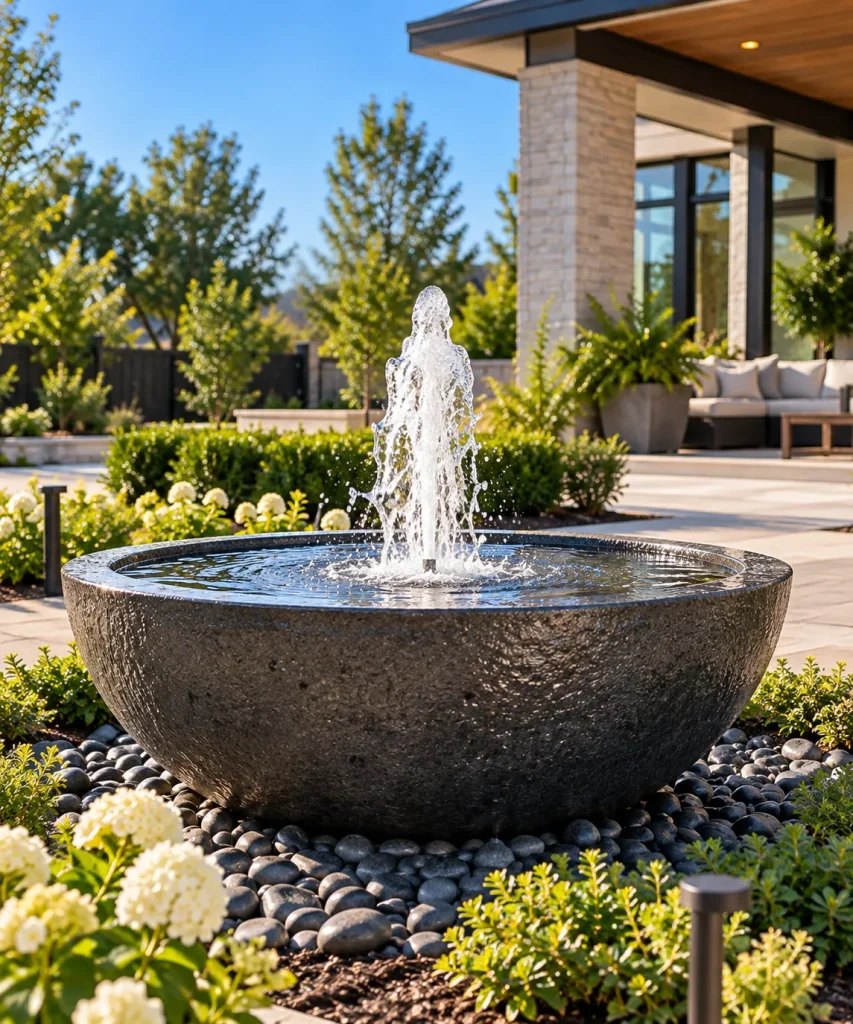
Hard water on stone and fixtures
Minerals show up on a fountain faster than in a pool because the water spreads thin over stone and fixtures and then evaporates, leaving deposits where it dries. Hardness varies widely across the territory. The Mountain View City FAQ puts its SFPUC zones north of Cuesta Drive at 10 to 30 mg/L. Saratoga Creek surface water, serving Saratoga's Village and hills, measures 151 mg/L in San Jose Water's 2025 report. Groundwater in the same system averages 288 mg/L. Los Gatos draws roughly 80 percent of its supply from Los Gatos Creek surface water. On the harder supplies, deposits collect on lips, spillways and nozzles and stone can stain. Removing them calls for a method matched to the surface, since natural stone and delicate features can be damaged by an approach that suits tougher materials.
Fountains in a water shortage and when draining
Shortage plans treat fountains separately from pools. Cal Water's drought stages, which apply in Los Altos, ban filling ornamental lakes or ponds at Stage 3, one stage before swimming pools are covered at Stage 4. Across Santa Clara County, Valley Water's permanent water waste ordinance requires leaks to be repaired after written notice. A feature that holds its water is far easier to keep running through a declared shortage, so leaks are worth finding early. When a fountain has to be emptied, keep the water out of the street. Mountain View City Code lists fountains among unlawful storm drain discharges unless a permit or exemption applies. Saratoga City Code bars discharging polluted water into a storm drain or watercourse. The Santa Clara Valley Urban Runoff Pollution Prevention Program notes that storm drains flow to creeks and the Bay untreated, so check with your city before draining.
Saratoga Water Feature Maintenance: Frequently Asked Questions
Is Saratoga water hard enough to affect my pool or hot tub?
It depends on where in town you live. Valley Water's retailer table shows San Jose Water supplying the Village and downtown hills with Saratoga Creek surface water, which San Jose Water's 2025 Annual Water Quality Report puts at 151 mg/L of hardness, about 9 grains per gallon. The Highway 85 flat area receives Valley Water treated water, averaging 99 mg/L within a range of 77 to 146 mg/L. The harder hills water is worth watching in a hot tub, where minerals concentrate as water evaporates and is topped up.
Is Saratoga tap water adding phosphates to my pool?
Usually not. San Jose Water's Safety and Quality FAQ says phosphate in its source water and across its system never exceeds 1.5 mg/L. The same FAQ says elevated pool phosphates usually come from fertilizer, detergents, organic debris, pool chemicals or swimmers rather than tap water. Regular skimming and keeping garden runoff away from the water do more to limit algae food than changing how you fill.
Which Saratoga neighborhoods do you cover?
We look after pools across Saratoga, including Saratoga Village, Saratoga Oaks, Fruitvale Avenue Corridor, The Golden Triangle, Saratoga Woods and Bellgrove Circle and Kentfield. The full list of areas is on our Saratoga page. If you do not see yours, get in touch and we will confirm.
Why is my fountain losing water?
Evaporation and splash account for some loss, especially outdoors. Faster loss can come from a leak, a clogged line that sends water where it should not go or a problem with the plumbing. An inspection of the circulation system is the way to find out.
How often should a water feature be serviced?
It depends on the feature, where it is and how much debris reaches it. Outdoor features and busy public features usually need more frequent attention than indoor ones. We set the schedule as part of the treatment plan.
Watch what we do
-
Residential Services
-
Commercial Services
Other services we offer in Saratoga


Areas we serve
- Mountain View
- Los Gatos
- Los Altos
- Campbell
Where you can find us
Talk to us
So Why Puddle for Water Feature Maintenance in Saratoga?
-
Transparent Pricing
That’s Right. No Hidden Prices. Up Front and Straight Forward Pricing.
-
E-Reports
Your Service Sent in an E-Report, in Real Time. What Was Done, What Chemicals Were Used, What Your Levels Are At etc. All With Before & After Pictures, Time Stamped In and Time Stamped Out.
-
Happy Snappy Techs
Fully uniformed, CPO certified technicians in fully wrapped vehicles, so you always know who is at your gate and that your pool is in trained hands.
Ready to book Water Feature Maintenance in Saratoga?
Book online in under a minute, or call and someone will actually pick up.

Accredited, certified and reviewed