Chicago Pool Maintenance
Puddle Pool Services provides pool maintenance in Chicago and across the north and northwest suburbs, looking after the equipment that keeps the water right as well as the water itself. Visits check the pump and its baskets, filter pressure, visible plumbing and valves, the liner or surface, covers and fittings, with the chemistry balanced to suit your fill water. You see the readings and photos in an E-Report after each visit.
- Drop water levels to protect drains
- Clean debris before closing and upon opening
- Set the stage for a quick and easy openings
- Visual Inspections of components and mechanisms
- Create a safe environment for swimmers

video: init
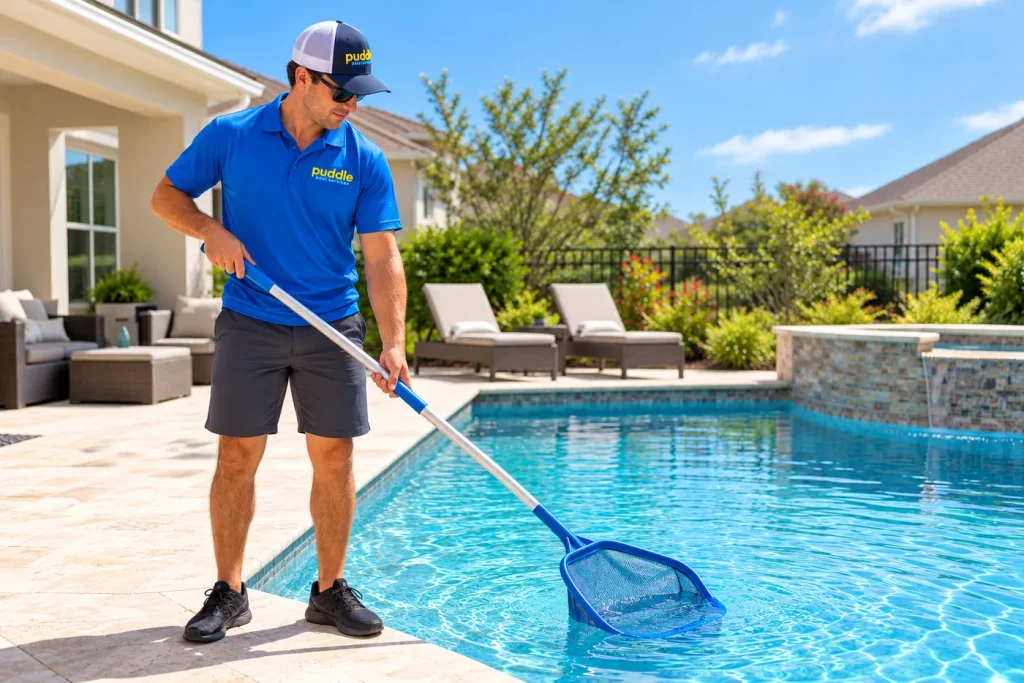
Maintenance looks past the water
Cleaning deals with what you can see: the water and the surfaces. Maintenance takes in the system behind them, meaning the pump, filter, heater, valves and plumbing. A pool can sparkle while a pump seal weeps or a filter clogs, and that gap is what a maintenance plan is designed to close. On each visit your technician reads the filter pressure, looks over the pump and empties its baskets and checks the visible plumbing and valves. The liner or surface, the covers and the fittings get a look too. Catching wear while it is still a small fix is the whole point. A hot tub fits on the same plan, since it needs the same attention to chemistry, filters and equipment and often needs it more frequently.
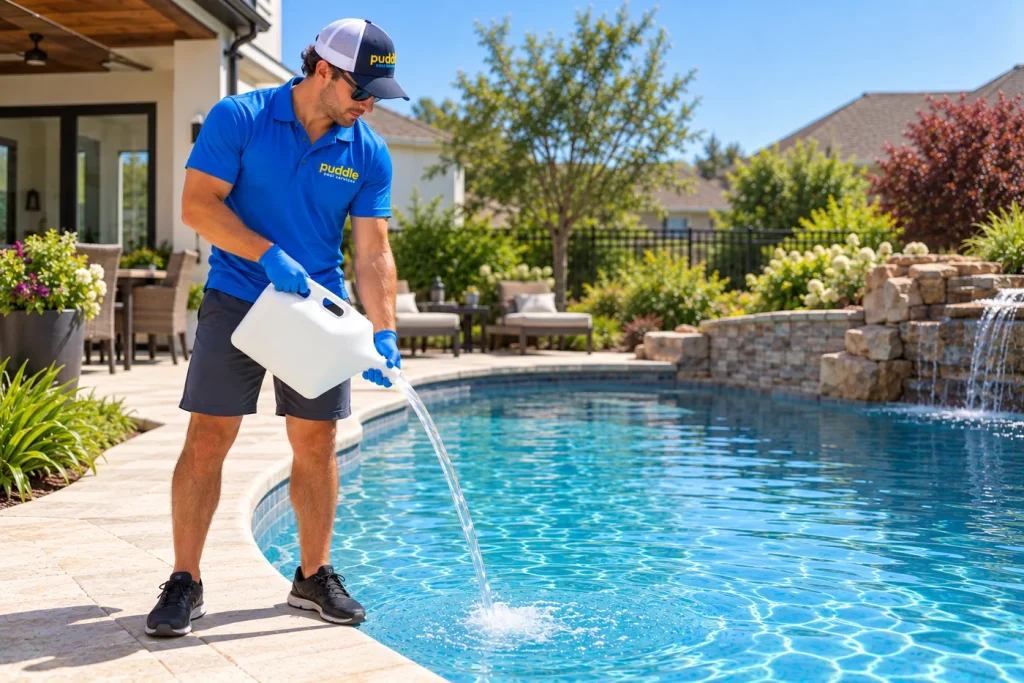
Circulation rules written into village codes
Several communities in the territory treat circulation and filtration as a legal requirement rather than good practice alone. Skokie's pool code sets a minimum recirculation capacity equal to the pool's volume divided by 18 for each hour of running. Lake Forest's pool subchapter calls for sand filters on residential pools at properties served by the public sanitary sewer and cartridge filters on residential spas and hot tubs, and it makes the owner responsible for treating the water and keeping a test kit. Winnetka's water shortage powers single out pools that lack a filter and recirculating system: in a declared state water shortage, the Village President can reduce or prohibit using water to maintain their levels. A filter that is sized correctly and kept working is part of staying within the code as well as keeping the water clear.
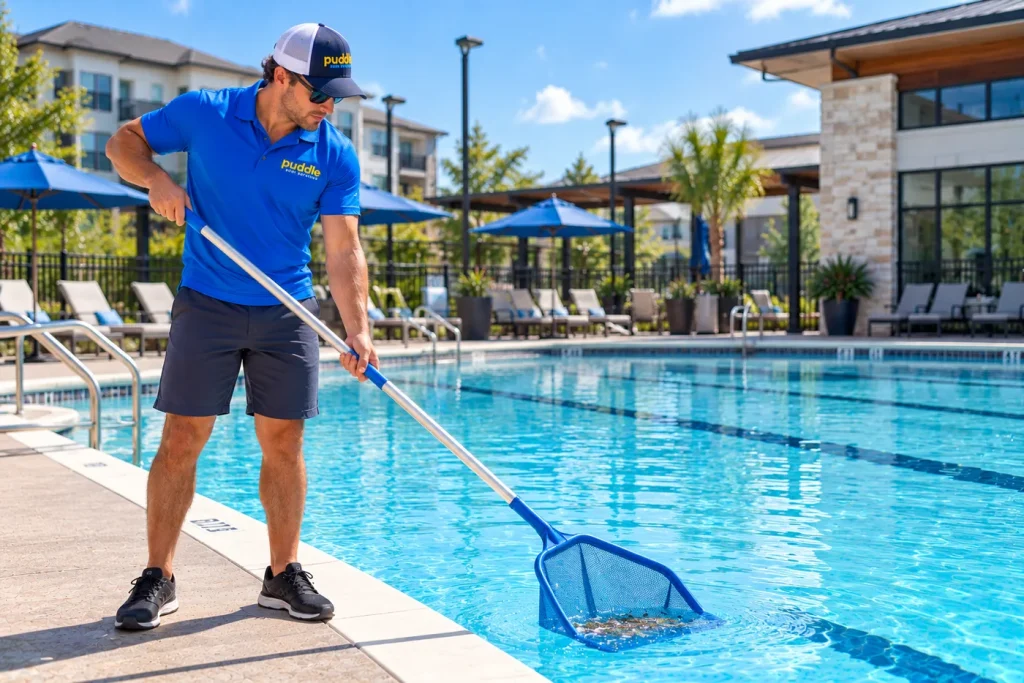
How your fill water treats metal and heaters
Chemistry decides how long equipment lasts. Water low in pH or alkalinity eats at heaters, metal parts and fittings, while water that runs high leaves scale behind. The starting point varies across the area. Chicago's own lab sheets from the first quarter of 2025 show a negative Langelier Saturation Index for treated lake water, which means it arrives slightly undersaturated and leans away from scaling. Wilmette's 2025 water report, covering the supply it also sells to Glenview, lists a pH of 8.08 and alkalinity of 109 ppm. Barrington's village wells sit at the far end of the scale at around 25 grains per gallon of hardness. A maintenance visit balances against whichever of these you start with, so the heater and plumbing are not quietly corroding or scaling between seasons.
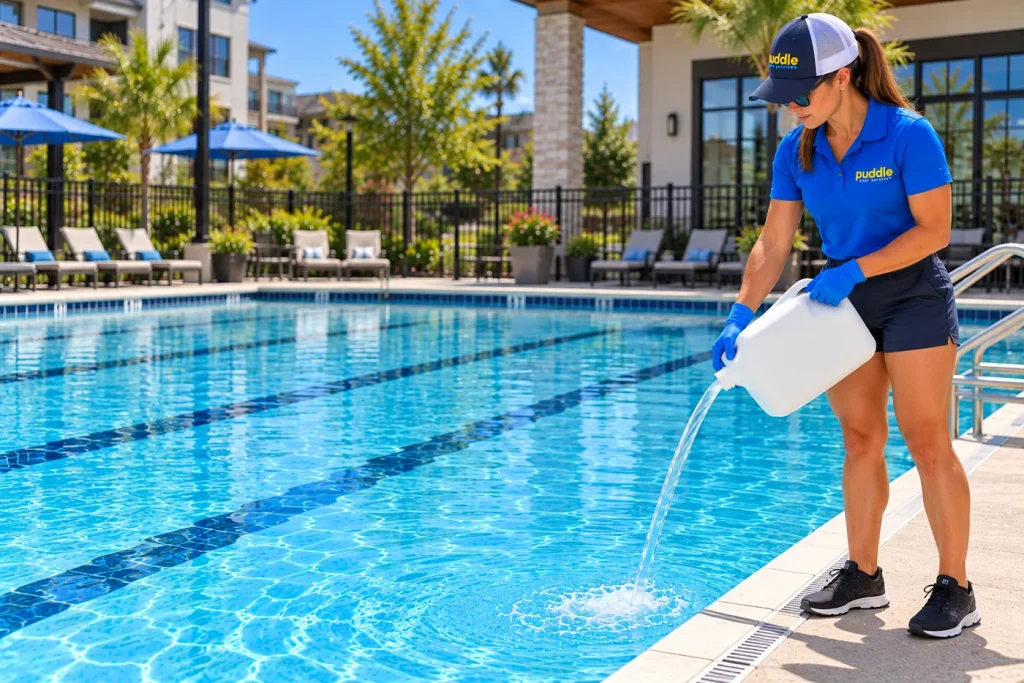
Signs your equipment is asking for attention
Equipment trouble rarely arrives all at once. The pool takes longer to clear than it used to, the pump sounds different, the pressure gauge drifts out of its usual range or the water simply gets harder to keep balanced. Mention any of these, because problems found early cost less to sort out. Pump run time is another common question. The right number of hours depends on the pool's volume and the pump's capacity, since the goal is to turn the full volume over. Running too little is the most common reason water will not stay clear, while running longer than needed mostly adds to the electricity bill. Your technician can work out what suits your setup and adjust it as the season changes.
A plan that follows the season
Most maintenance plans run heavier through the swimming season and lighter outside it, and some equipment work is easier when nobody is swimming. The length of that season shifts across the territory. NOAA's 1991 to 2020 normals give a median freeze free period of 201 days at Midway, the station used for Hinsdale, and 193 days at O'Hare. Near Barrington the figure is 177 days, and at Waukegan, the station used for Lake Forest, it is 170 days. A pool that sits unused still needs either regular maintenance or a proper closing, because untreated standing water and idle equipment are where problems develop out of sight. Lake Forest's drinking water FAQ also notes that its water can look cloudy in winter once Lake Michigan drops below 40 F, which is worth knowing if you top up a pool or hot tub in the cold months.
Chicago Pool Maintenance: Frequently Asked Questions
Does Lake Forest require a particular type of pool filter?
Yes. Lake Forest's swimming pool code calls for sand filters on residential pools at properties served by the public sanitary sewer and cartridge filters on residential spas and hot tubs. It also makes the owner responsible for treating the water with approved chemicals and keeping a test kit. Check with the City before replacing filter equipment.
How can a pool be drained in Hinsdale?
Hinsdale's amended pool code sends drainage to the storm sewer where one is available and otherwise to the sanitary sewer at no more than 10 gallons per square foot of filter area. Draining is not allowed while it is raining, and public and semiprivate pools need the enforcing officer's approval first. Confirm the method with the Village before draining a residential or commercial pool.
Which Chicago neighborhoods do you cover?
We look after pools across Chicago, including Lakeview, Lincoln Park, Uptown, Edgewater, Rogers Park and North Center. The full list of areas is on our Chicago page. If you do not see yours, get in touch and we will confirm.
Is maintenance still needed if the pool is not being used?
Yes. Standing, untreated water is more work to recover than water that has been kept balanced, and equipment that sits idle without being run or properly shut down is where problems develop quietly. A pool that is out of use either needs maintaining or needs closing properly.
Can maintenance be scheduled around the season?
Yes, and most customers do. Service is usually heavier through the swimming season and lighter outside it, and some equipment work is better done when the pool is not in use. It is worth discussing the pattern rather than assuming one schedule fits the whole year.
Watch what we do
-
Residential Services
-
Commercial Services


Areas we serve
- Evanston
- Skokie
- Lincolnwood
- Park Ridge
- Des Plaines
- Glenview
- Wilmette
- Winnetka
- Northbrook
- Highland Park
- Lake Forest
- Deerfield
- Arlington Heights
- Mount Prospect
- Palatine
- Wheeling
- Buffalo Grove
- Schaumburg
- Hoffman Estates
- Barrington
- Vernon Hills
- Libertyville
- Lake Zurich
- Crystal Lake
- McHenry
- Elgin
- St. Charles
- Elmhurst
- Hinsdale
- Glencoe
Where you can find us
Talk to us
So Why Puddle for Pool Maintenance in Chicago?
-
Transparent Pricing
That’s Right. No Hidden Prices. Up Front and Straight Forward Pricing.
-
E-Reports
Your Service Sent in an E-Report, in Real Time. What Was Done, What Chemicals Were Used, What Your Levels Are At etc. All With Before & After Pictures, Time Stamped In and Time Stamped Out.
-
Happy Snappy Techs
Fully uniformed, CPO certified technicians in fully wrapped vehicles, so you always know who is at your gate and that your pool is in trained hands.
Ready to book Pool Maintenance in Chicago?
Book online in under a minute, or call and someone will actually pick up.

Accredited, certified and reviewed